
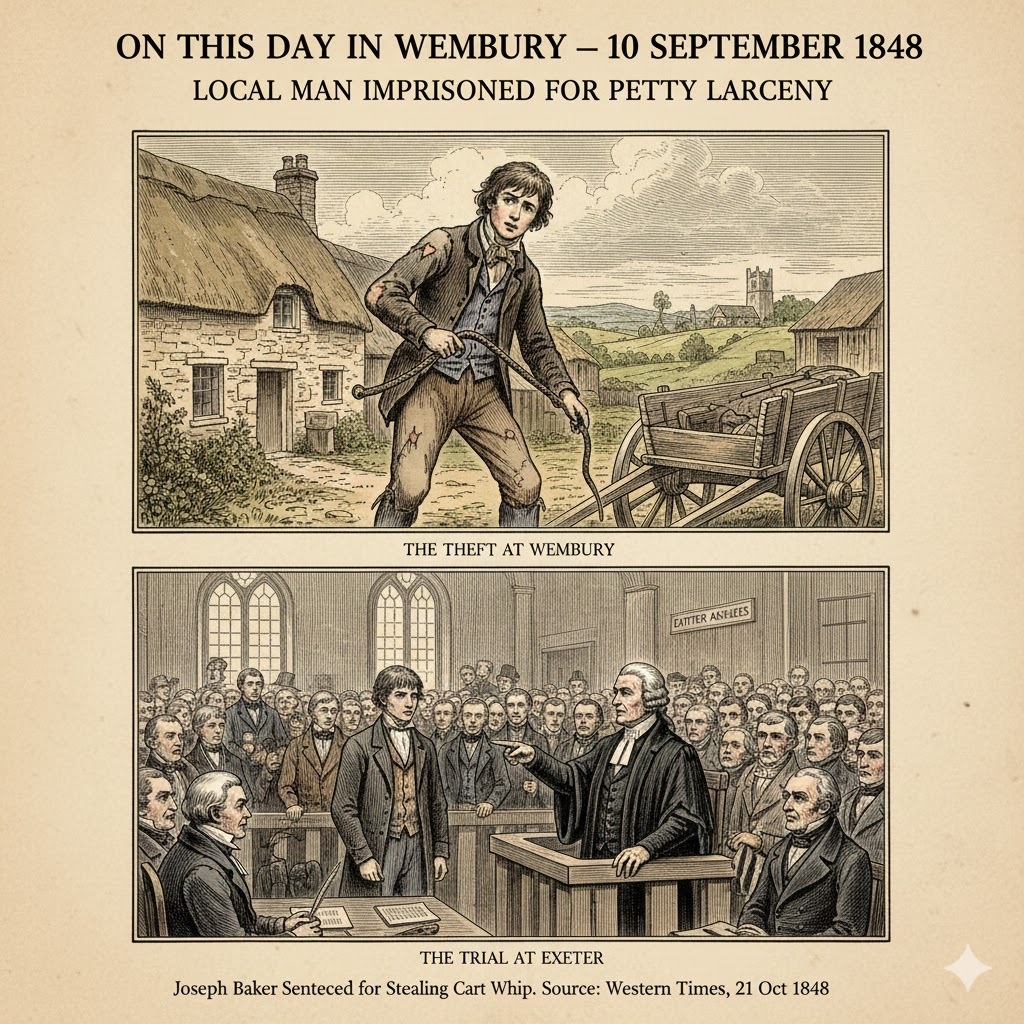
On This Day in Wembury – 10 September 1848
At the Devon Assizes in Exeter, Joseph Baker, a 16-year-old from Wembury, was sentenced to one month’s imprisonment for stealing a cart whip belonging to Thomas Elliott. His case appeared alongside dozens of others from across Devon, ranging from petty theft to serious crimes that resulted in transportation for up to 14 years.
The court records noted how many offenders were barely literate, half of those tried could neither read nor write, and highlighted how often young men in their teens or twenties filled the prison calendars. Baker’s conviction, though minor compared to many, still illustrates how Wembury villagers appeared in the same judicial system that dealt with everything from sheep stealing to violent crime.
Source: Western Times, 21 Oct 1848.
On This Day in Wembury, 10 September 1940
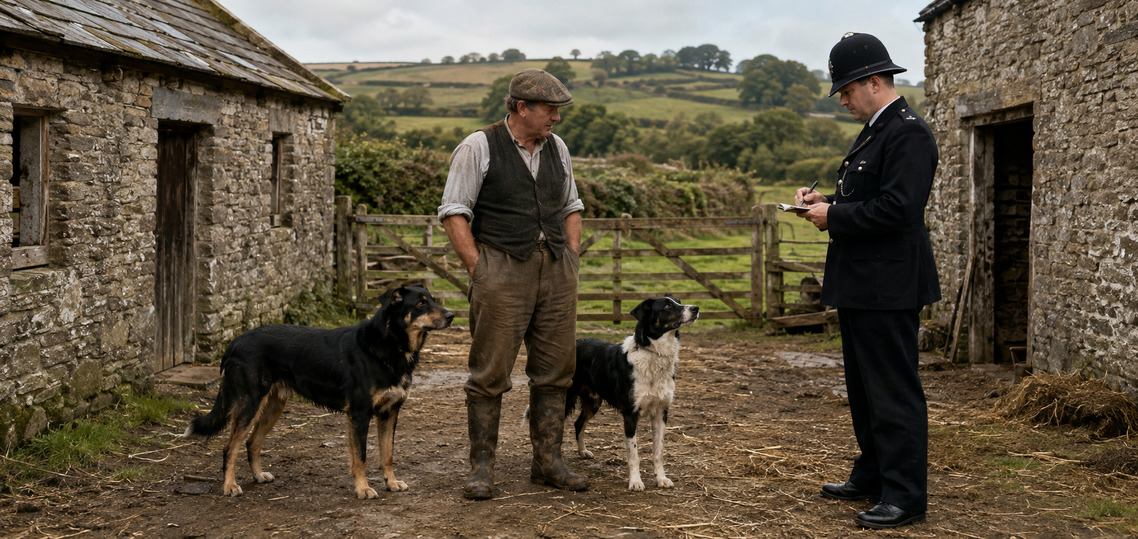
Knighton Farm dog owner fined for having no licences
Even during the darkest days of the Second World War, the ordinary business of the local courts continued. On 10 September 1940, the Western Morning News reported that three local dog owners had appeared before Plympton magistrates for breaking regulations concerning their animals.
Among them was Maurice John Sherwill of Knighton Farm, Wembury. He was fined £1 10s for keeping two dogs without licences.
At the time, every dog normally required an annual licence costing seven shillings and sixpence. Licences for Sherwill’s two dogs would therefore have cost fifteen shillings. His thirty shilling fine was twice that amount.
Two other owners appeared before the magistrates at the same hearing.
William Charles Black of 6 Moorview, Pomphlett, was fined ten shillings after allowing a dog onto the highway without the owner’s name and address displayed on its collar.
Mrs Sofia Brill of Sunnyside, Yealmpton, was fined five shillings for the same collar offence and another five shillings for allowing a dog to stray on the highway.
The collar requirement came from the Control of Dogs Order of 1930. It stated that a dog on a highway or in a public place had to wear a collar bearing the owner’s name and address. There were exemptions for certain working dogs while they were being used for herding livestock, controlling vermin or sporting purposes.
The law was intended to make stray dogs easily identifiable and to reduce attacks upon livestock. This was particularly important in farming communities such as Wembury, where an uncontrolled dog could cause serious injury and panic among sheep and cattle.
The timing of the court case is striking. Britain was in the middle of the Battle of Britain. Plymouth was preparing for air raids, the threat of invasion remained very real and food production from farms such as Knighton was increasingly important. Yet somebody was still checking dog licences and collar plates, and the magistrates were still dealing with owners who had failed to comply.
The report provides a small but revealing glimpse of daily life in wartime Wembury. National events may have been dominating every newspaper, but local responsibilities did not disappear. Dogs still strayed, licences still had to be purchased and the law still expected an owner’s name and address to be fixed firmly to the collar.
Source: Western Morning News, Tuesday 10 September 1940.
Entries are summaries and interpretations of historical newspaper reports.