
On This Day in Wembury – 17 September 1853
A wedding that stirred the whole village
On 17 September 1853, the Exeter and Plymouth Gazette reported that Wembury had been the scene of “unusual stir and animation”.
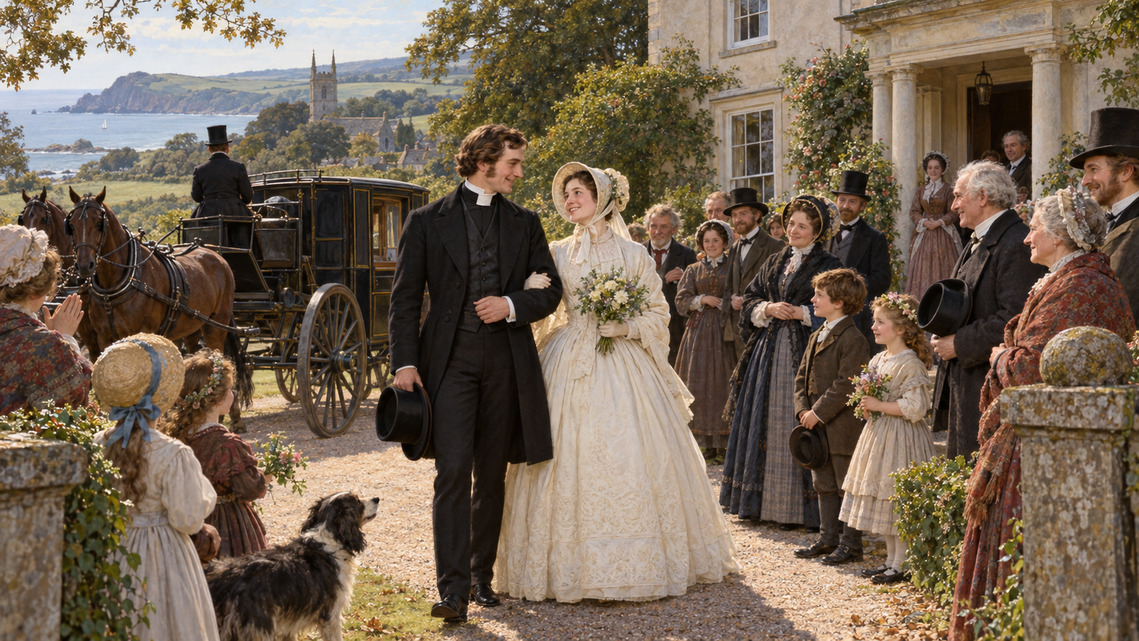
Four days earlier, on Tuesday 13 September, the Reverend J. L. Harding, Rector of Littleham near Bideford, had married the only daughter of Nathaniel Barwell of Wembury House.
The ceremony was conducted by the Reverend C. Pauley because the Reverend P. Middleton, an uncle of the bride, was unavoidably absent. When the wedding party returned from the church, the bride and groom joined around thirty or forty guests for what the newspaper described rather grandly as an “elegant déjeuner” – effectively a substantial wedding breakfast.
The guest list offers an intriguing glimpse of Wembury’s social circle in the middle of the nineteenth century. It included Mrs Harding, the bridegroom’s mother; Captain Harding, his brother; the Reverend H. O. Middleton, a cousin of the bride and curate of St Stephen’s; F. Bulteel and Mrs Bulteel; Wembury’s vicar, the Reverend Lane; and members of the Lockyer, Collins-Splatt, Bloxam and Ewart families.
Some of those names are familiar from other episodes in Wembury’s history. Nathaniel Barwell was then the owner of Wembury House, the elegant late-Georgian house which survives today. Wembury House had replaced the much older and far grander Elizabethan mansion, which had fallen into ruin and was demolished in 1803.
Among the guests was J. Lockyer, almost certainly James Lockyer of South Wembury House, now known as Thorn. Only two years later, Barwell and Lockyer would find themselves on opposing sides of a court case concerning a boundary wall and a disputed strip of land. Witnesses even described events taking place by moonlight. It is rather pleasing to find the two men here in happier circumstances, sharing a wedding breakfast before disagreements over walls and property intervened.
The Bulteels were another prominent South Devon family, closely associated with Flete and the Yealm area. Their presence, together with several clergymen, a captain and neighbouring landowners, suggests that this was an important social occasion as well as a village celebration.
But the report was careful not to make the day sound like an entirely private gathering of the wealthy. It recorded that “nearly the whole village” joined in the festivities at the great house. For one September day, at least, Wembury House appears to have opened itself to the wider community.
After the meal and celebrations, the newlyweds climbed into the bridegroom’s carriage and departed for the Continent. The newspaper does not tell us where they were going, but it must have made a memorable ending to a day which had apparently brought much of Wembury together.
Source: Exeter and Plymouth Gazette, 17 September 1853.
On This Day in Wembury – 17 September 1902
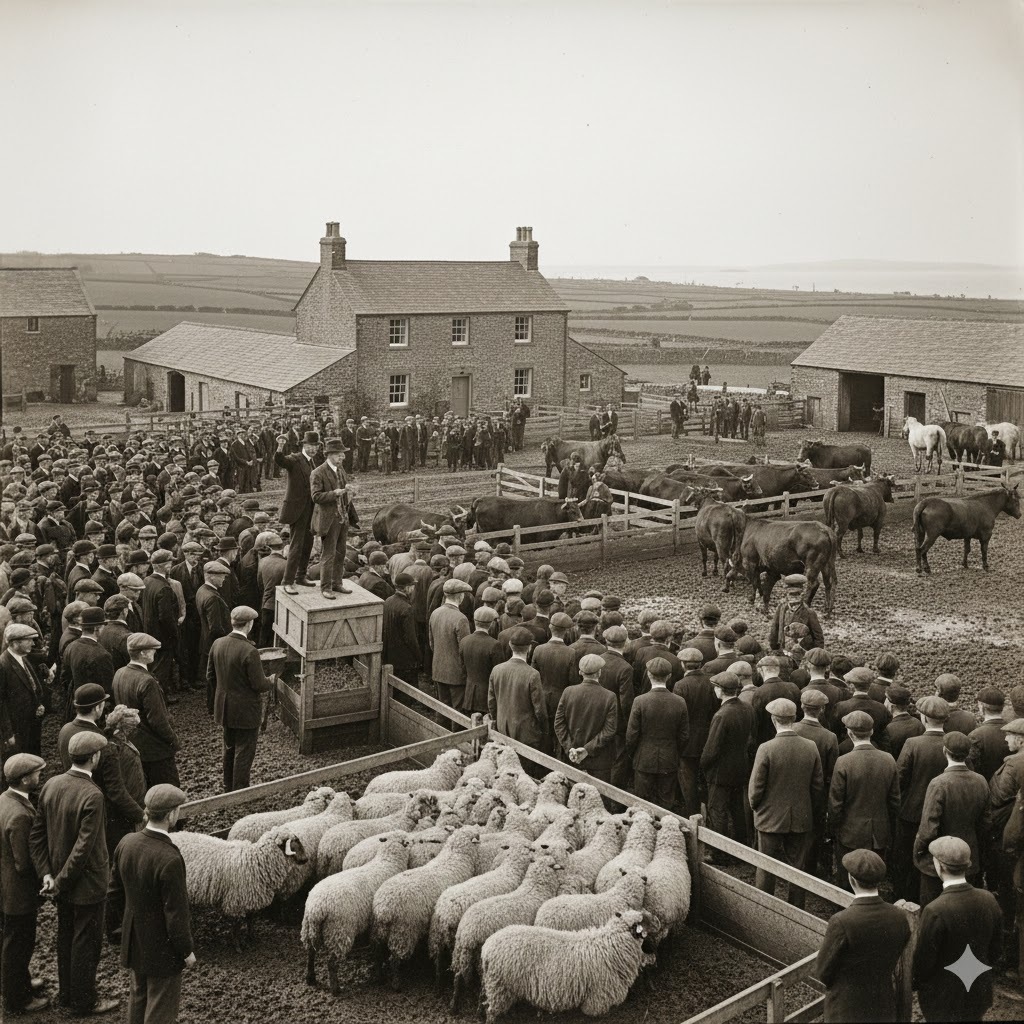
An important stock sale was held at Langdon Barton, Wembury, by auctioneers Bourne & Son on behalf of Mr. Harold Pearse, who was quitting the farm. The sale included around 230 sheep, 31 bullocks, and 12 horses and colts, described as a well-bred herd of South Devon stock.
Such farm dispersal sales were significant local events, drawing dealers and farmers from across South Devon. They also mark turning points in the tenancy and management of major Wembury farms, with ownership and stock often changing hands in a single day.
Source: Brixham Western Guardian, 4 Sept 1902.
Entries are summaries and interpretations of historical newspaper reports.