
On this day in Wembury – 26 September 1924
The death of Mrs Bessie Frances Gore of Langdon Court
On 26 September 1924, the Western Morning News reported the death in Plymouth the previous day of Mrs Bessie Frances Gore, a woman with strong connections both to Wembury and to the wider Plymouth community.
The newspaper described her as the widow of the late Colonel George Anthony Ellard Gore and the daughter of the Rev. Thomas Coulthard, a former vicar of Plymstock. It also remembered her particularly for her charitable work, describing her as a liberal supporter of many philanthropic organisations and as someone who gave practical help and sympathy to people in need.
There was rather more to Mrs Gore's connection with Wembury than the short newspaper notice reveals. She had previously been Bessie Frances Cory, the second wife of wealthy businessman Richard Cory, who owned Langdon Court. After Cory's death in 1904, she married Colonel Gore on 27 May 1905. Intriguingly, Gore was no newcomer to the family circle: a photograph of a shooting party at Langdon Court from around 1891 shows Richard and Bessie Cory together with Colonel Gore and their distinguished guests, including the future King Edward VII.
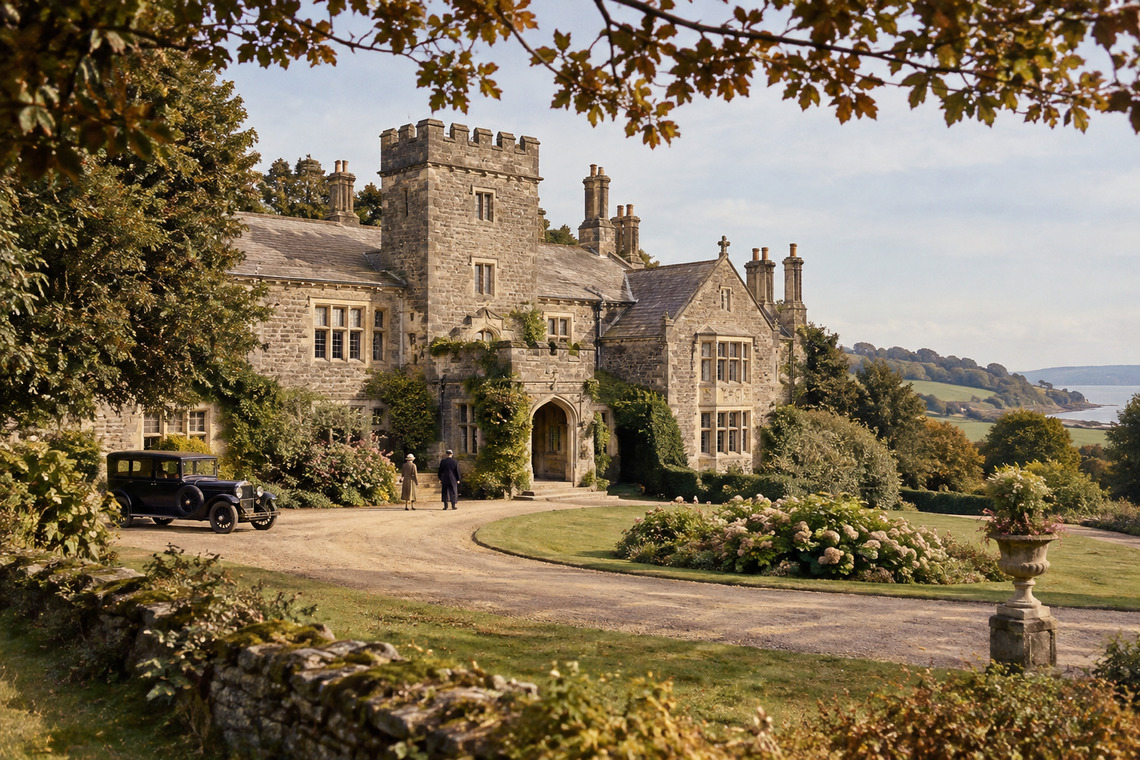
Langdon Court in those years was very much a country estate rather than the hotel remembered by more recent generations. The 1891 household included a butler, footman, cook, kitchen maids, lady's maid, housemaids and governess, with coachmen, grooms, a gamekeeper, gardener and laundry staff elsewhere on the estate.
The house itself was already centuries old. The medieval manor was rebuilt in about 1577 and substantially remodelled around the beginning of the eighteenth century. The Cory period brought further alterations in the late nineteenth century, including the distinctive crenellated tower. Langdon remained a private residence into the twentieth century and was the scene of visits by Edward VII.
Mrs Gore's interests extended beyond Langdon. The Western Morning News noted her generosity towards St James-the-Less Church in Plymouth, which she regularly attended. Her funeral was to take place at Powderham on Saturday, followed by a Requiem Mass at St James-the-Less at ten o'clock.
So this small death notice provides a glimpse of a rather different Wembury: Langdon Court as the centre of a substantial country estate, with servants, horses, shooting parties and royal visitors, but also a family whose wealth and influence reached into the charitable and religious life of Plymouth.
Western Morning News, 26 September 1924
On this day in Wembury 26 September 1927
Bather drowned off Wembury coast
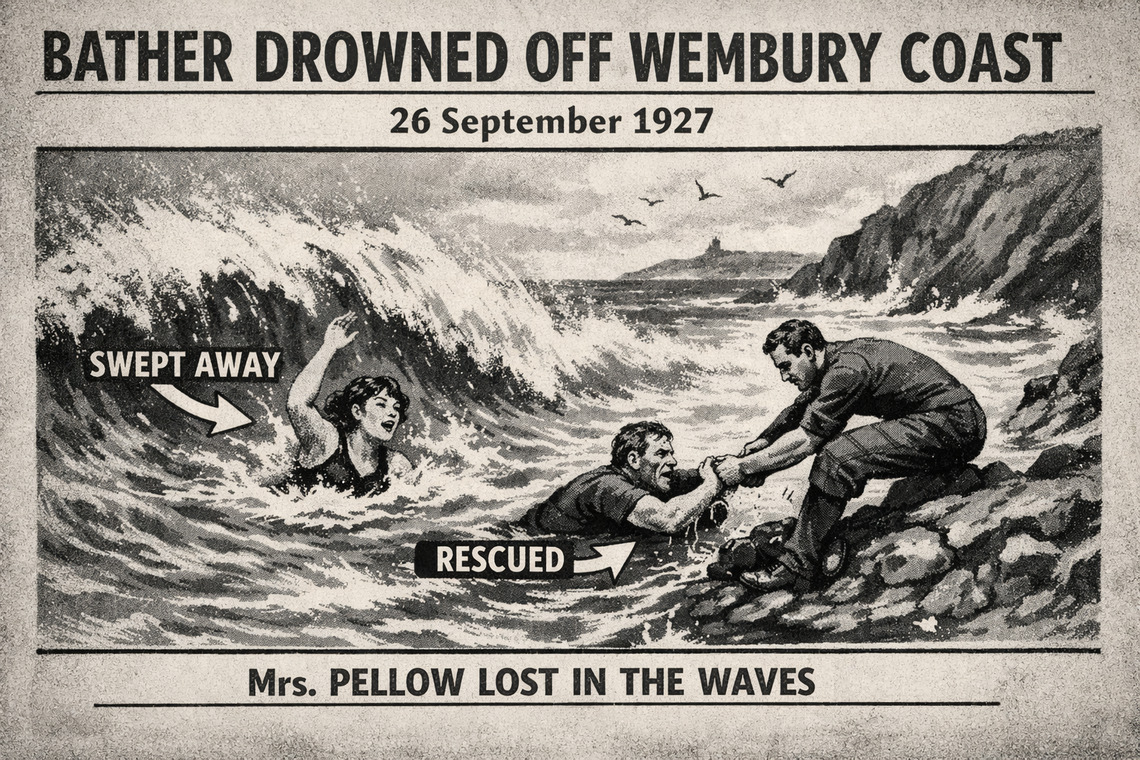
A thirty-five-year-old woman, Mrs Pellow of Furneaux Road, Devonport, was drowned off the Wembury coast near the entrance to Plymouth Sound. She had been bathing in a small cove with a man when a large breaker swept both bathers off their feet. Mrs Pellow disappeared almost immediately and was lost. The man was saved by another man whose name was not reported.
The brief report gives no further detail about the exact cove or the later recovery, but it captures the danger of sudden heavy surf along this stretch of coast, where an apparently manageable sea could turn deadly in moments.
Source: Daily Mirror, 26 September 1927.
On This Day in Wembury – 26 September 1935
An auction at the Law Chambers, Princess Square, Plymouth, offered several freehold properties in Wembury following the death of Mr. Mark Lamerton.
The lots included:
-
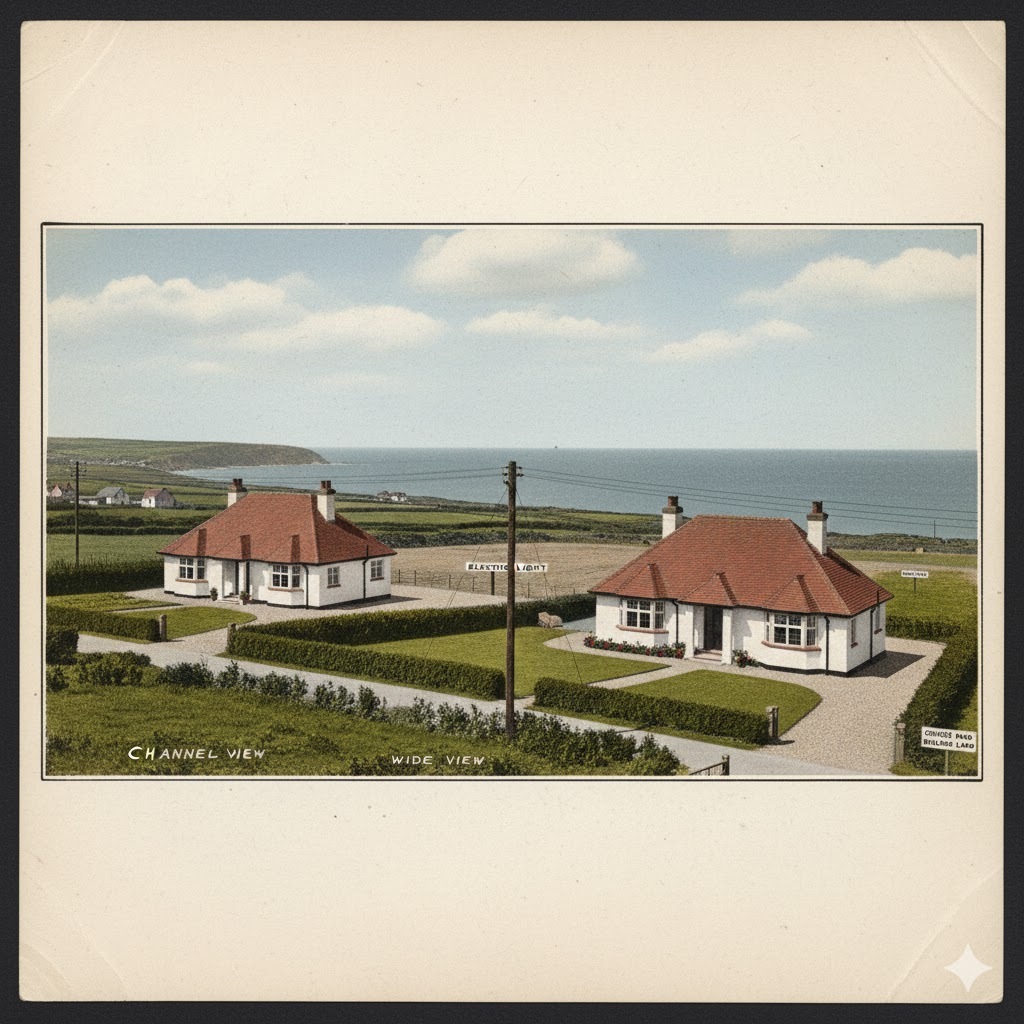
Channel View: a detached bungalow with five rooms, scullery, w.c., large garden, paddock, and electric light.
-
Wide View: another detached bungalow with five rooms, scullery, bath, w.c., large garden, and electric light.
-
A building site adjoining Lot 2.
-
Additional building land in Church Road, Wembury.
The sale highlighted the growing 1930s market for bungalows in Wembury, promoted as healthy homes with extensive views, and reflected the parish’s transition from a purely agricultural community to a coastal residential village.
Source: Western Morning News, 31 Aug 1935.
Entries are summaries and interpretations of historical newspaper reports.