
On This Day in Wembury
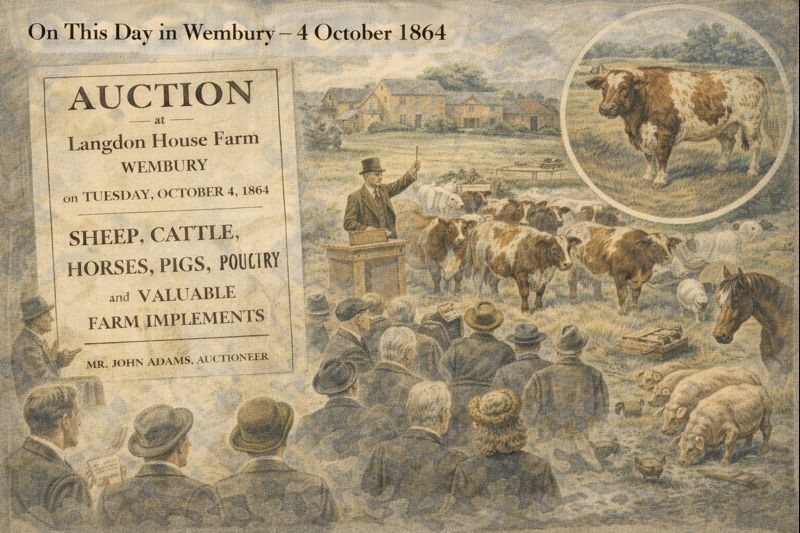
4 October 1864 — Auction at Langdon House Farm
On this day an auction was held at Langdon House Farm, Wembury, conducted by Mr. John Adams. The sale comprised 98 sheep, 12 bullocks, a pure shorthorn bull, 4 farm horses, pigs, poultry, and a variety of farm implements. Advertised in the Western Daily Mercury the previous week, the event drew attention to the quality of the livestock, with many of the bullocks described as well-bred short-horns. The sale commenced at three o’clock in the afternoon on the farm premises.
Reflection: Such auctions were milestones in the farming calendar, drawing farmers, dealers, and neighbours together. They give us a glimpse of the scale and ambition of Victorian agriculture in Wembury, where improving bloodlines and quality stock were a source of local pride.
Source: Western Daily Mercury, 28 September 1864 (advertisement for auction on 4 October 1864)
On This Day in Wembury — 4 October 1921
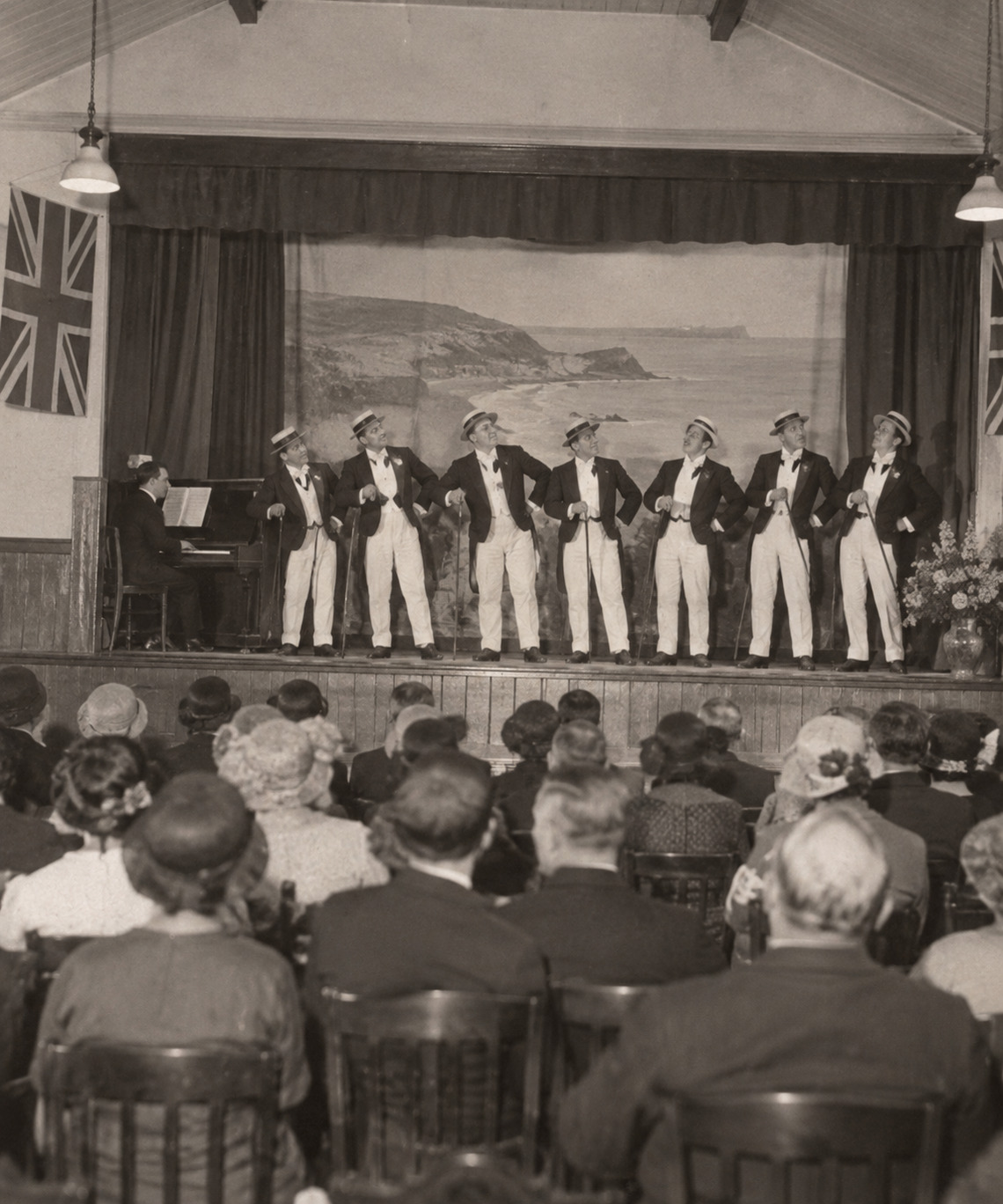
The Wembury Warblers take to the stage
On 4 October 1921, the Western Morning News reported on a local entertainment group with the splendid name of the Wembury Warblers.
The newspaper recorded:
“The recently formed Warblers troupe of minstrels, under the direction of Mr. W. East, gave their first performance before a large audience in aid of the funds of Wembury Social Club, which will benefit by £14 13s. 10d.”
So this appears to have been the first public performance by the newly formed Wembury Warblers, and apparently a successful one. A large audience turned out and the evening raised £14 13s 10d for Wembury Social Club — roughly £14.69 in decimal money, but a very substantial fundraising sum in 1921.
There is some interesting social history packed into those few lines. Britain was only three years beyond the end of the First World War, and village clubs, concerts and amateur entertainment played an important part in rebuilding community life. Wembury was still a comparatively small rural parish, so a well-attended local show would have been quite an occasion.
The word “minstrels” also needs its historical context. In 1921 it commonly described a particular form of variety entertainment involving songs, comic sketches and musical numbers. Some minstrel traditions of the period involved blackface caricature, something r regarded as racist and offensive today. The short newspaper report doesn't tell us what form the Wembury Warblers' performance took, so we shouldn't assume that it did, but the terminology places the troupe within that wider entertainment tradition.
What is particularly lovely is the name itself: The Wembury Warblers. More than a century later, this tiny newspaper paragraph preserves the memory of a group of Wembury people who got together, rehearsed a show, filled a hall and raised money for their local social club.
And after their first night, they could presumably say they'd made £14 13s 10d without getting the bird.
Source: Western Morning News, Tuesday 4 October 1921.
Entries are summaries and interpretations of historical newspaper reports.