
On This Day in Wembury
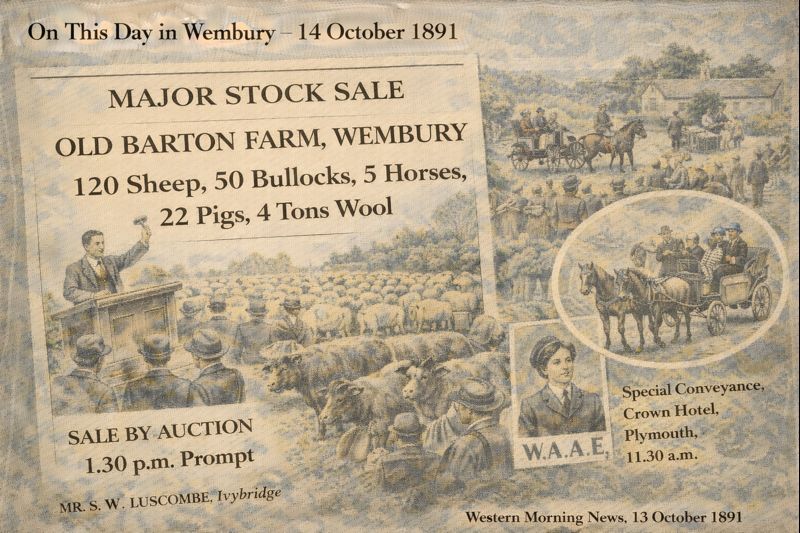
14 October 1891 — Major Stock Sale at Old Barton Farm
On this day a large-scale auction was held at Old Barton Farm, Wembury, featuring 120 sheep, 50 bullocks, 5 horses, 22 pigs, and 4 tons of wool. The sale began at 1.30 p.m. and drew buyers from across the district. To ensure good attendance, a special conveyance left the Crown Hotel, Plymouth, at 11.30 a.m., bringing in dealers, butchers, and farmers. This kind of organised transport shows how important rural sales were to the city economy in the days before motor cars, helping to connect Wembury’s produce directly with urban markets.
The Old Barton auction underlines the scale and value of farming in late-Victorian Wembury. Large quantities of livestock and wool flowed from village farms into Plymouth’s supply chains, and the provision of transport reminds us that even before modern infrastructure, rural and urban communities were tightly bound together.
Source: Western Morning News, 13 October 1891 (advertising the sale for 14 October).
Wembury On This Day — 14 October 1992
Dirty beach dispute
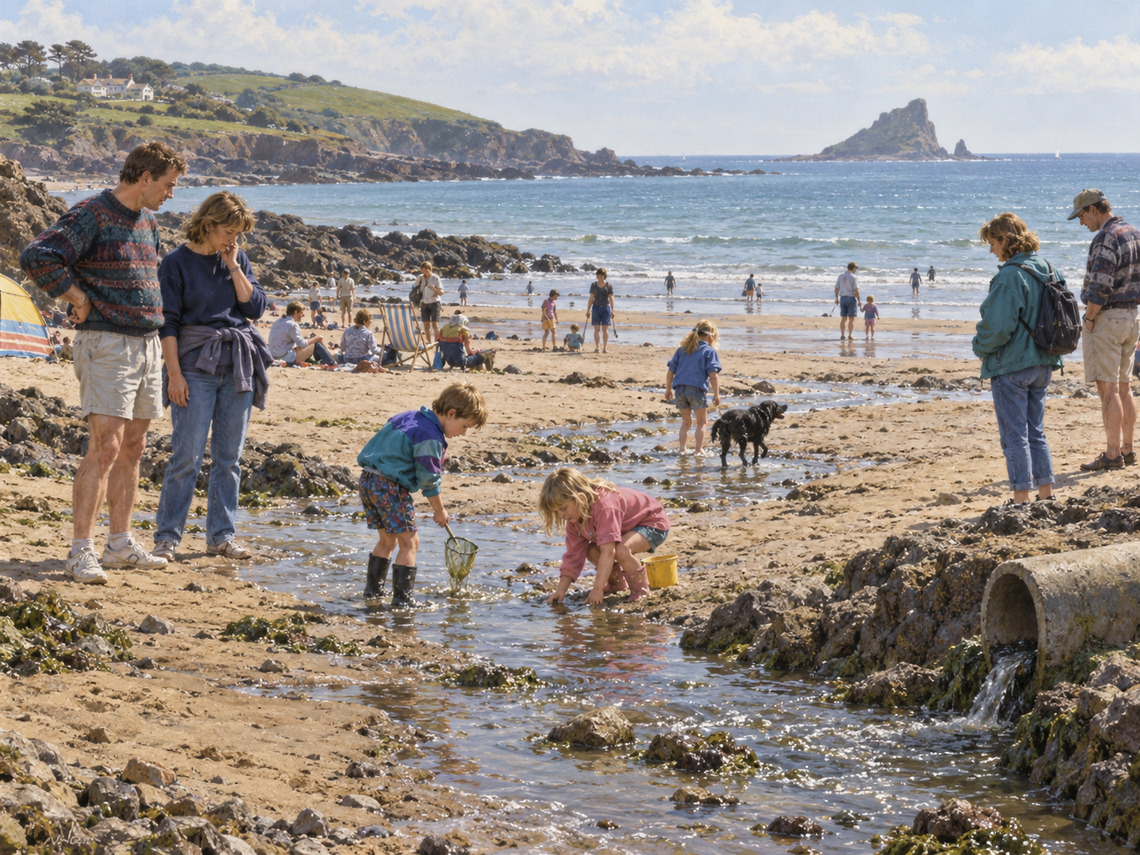
A dispute over polluted streams at Wembury and Bovisand reached the press on this day in 1992.
Plymouth City Council was preparing to seek permission from South Hams to put up warning notices at beaches where streams were said to be contaminated. The problem, according to Plymouth’s environmental-health officer, was that the water running across the beaches had tested above European Community bathing-water standards for sewage contamination.
The concern was especially for children. The report noted that youngsters played in the streams, waded in them and could swallow the water. Contamination of this kind could lead to intestinal illness and stomach upsets. Plymouth councillors argued that, if the pollution was recurring, the public had a right to be warned.
But responsibility was disputed. South Hams District Council had apparently declined to act, while Plymouth said it had duties as the health authority responsible for that stretch of foreshore. It was a familiar local-government tangle: one authority identifying a risk, another controlling the land, and the beachgoer left to make sense of it.
More than thirty years on, the language has changed — we now hear about water-quality classifications, outfalls, storm overflows and live alerts — but the underlying concern sounds strikingly familiar. Wembury’s sea and streams have always been part of the pleasure of the place; the question of how clean they are clearly has a long history too.
Entries are summaries and interpretations of historical newspaper reports.