
On This Day in Wembury
10 November 1928 — Wembury Named in Foot-and-Mouth Infected Area
On this day the Exeter and Plymouth Gazette carried an official notice from the Ministry of Agriculture contracting the Plymouth Foot-and-Mouth Disease Infected Area. The restricted zone still included Wembury parish, along with Plymstock, Brixton, Yealmpton, Newton Ferrers, Revelstoke, and others. Controls on livestock movements were enforced to contain the spread.
Seen in hindsight, the 1928 order foreshadowed the 2001 Foot-and-Mouth crisis, when Wembury again found itself affected — not only by restrictions on farming, but by the extraordinary closure of Wembury Beach and coastal footpaths by the National Trust. The beach, usually open year-round, was locked off to prevent visitors from inadvertently carrying infection to nearby farms. The memory of those months remains vivid locally.
Source: Exeter and Plymouth Gazette, 10 November 1928. Additional context from National Trust and government accounts of the 2001 epidemic.

On This Day in Wembury — 10 November 1986
Pensioner scares off raiders at Wembury
On 10 November 1986, the Western Evening Herald reported a disturbing series of raids on elderly residents at Wembury and Staddiscombe.
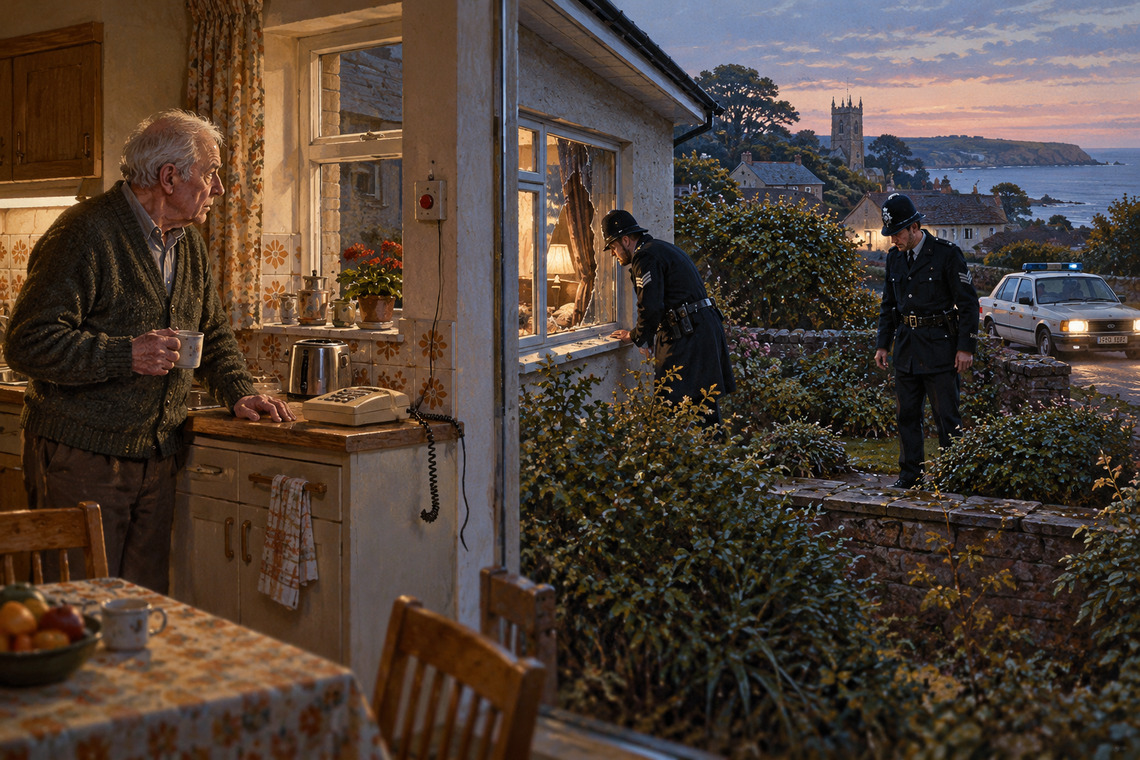
Among the victims was 80-year-old Percy Wilkinson, who was sitting in the kitchen of his bungalow in Church Road, Wembury, when three men entered after breaking in through a bedroom window.
One of them asked him:
“Have you got anything for us?”
Percy reacted quickly. He went into his bedroom, apparently to fetch something, but instead locked himself inside and pressed an alarm button which had been installed only three months earlier.
The alarm was linked to a nearby storeroom and the noise appears to have frightened the intruders away.
Before leaving, however, the gang cut the telephone wires at the house.
Police believed the same men then travelled by car to Staddiscombe, where another elderly resident was attacked. The newspaper reported that two sisters, aged 79 and 70, were confronted after the raiders smashed a window to get inside. One of the women was pushed to the floor while the house was searched.
The men escaped with only a small amount of money and jewellery, but the physical and emotional impact on the victims was far greater.
Police issued a warning following the attacks and appealed for information about the gang, who were believed to be travelling by car around the area.
The story is unsettling because of how deliberately vulnerable people were targeted. These were not opportunistic break-ins at empty houses. The raiders entered knowing that elderly residents were at home and used intimidation to try to obtain money.
Percy Wilkinson’s response, though, turned the Wembury raid into something rather different. An alarm installed only weeks earlier did exactly what it was meant to do and gave him a way of summoning help without confronting the intruders directly.
In an age before mobile phones and domestic CCTV, a simple wired alarm could make all the difference.
Source: Western Evening Herald, Monday 10 November 1986.
Entries are summaries and interpretations of historical newspaper reports.