
On This Day in Wembury — 22 November 1856
A rent dispute at Wembury Mill ends up in court
On 22 November 1856, the Royal Devonport Telegraph and Plymouth Chronicle reported a court case arising from a dispute over rent and household goods at Wembury Mill.
The plaintiff was Henly Nicholls, described as a miller living at Wembury Mill. The defendant, William Beel, was a farmer associated with property at Spriddlestone near Brixton.
At the heart of the case was an old landlord’s remedy known as distress for rent.
Nicholls owed rent and, before the next quarter day arrived, removed his furniture and other possessions from the cottage. Beel claimed that this had been done deliberately to prevent him, as landlord, from seizing the goods in payment of the arrears.
Under eighteenth-century law, landlords were allowed in certain circumstances to follow goods which had been removed from rented premises in order to avoid distraint. Beel therefore had Nicholls’s possessions seized and sold.
Nicholls took him to court, claiming £3 15s in damages for the seizure and sale.
The newspaper gives a remarkably vivid flavour of the argument.
Beel’s side alleged that Nicholls had said he would remove his belongings because he believed the landlord could no longer “follow” them after changes in the law. That remark was used as evidence that he had intended to evade payment.
Nicholls strongly denied trying to cheat his landlord. He told the court that he had been moving because he intended to take another house in the neighbourhood and insisted that he had always meant to pay what he owed.
The contents of the cottage were modest. Among the goods discussed in court were household furniture and even a pig, the value of which became part of the evidence.
The case went before a jury, which had to decide whether the removal of the goods had genuinely been part of a move or whether it had been carried out fraudulently to defeat the landlord’s legal right to recover the rent.
The legal principle involved dated back more than a century. The statute 11 George II, chapter 19, passed in 1738, strengthened landlords’ powers where tenants secretly removed goods to avoid distraint. That law remained part of the framework governing rent disputes well into the Victorian period.
What makes this little case so useful for Wembury history is that it takes us away from estates, churches and prominent families and into something much more ordinary: rent, furniture, a cottage, a pig and a disagreement between landlord and tenant.
For Nicholls, the issue was serious enough to go to court.
For us, nearly 170 years later, it provides a small but very human glimpse of life around Wembury Mill in 1856.
Source: Royal Devonport Telegraph and Plymouth Chronicle, Saturday 22 November 1856.

On This Day in Wembury
22 November 1892 — Game Trespass Case on Mr. Cory’s Land
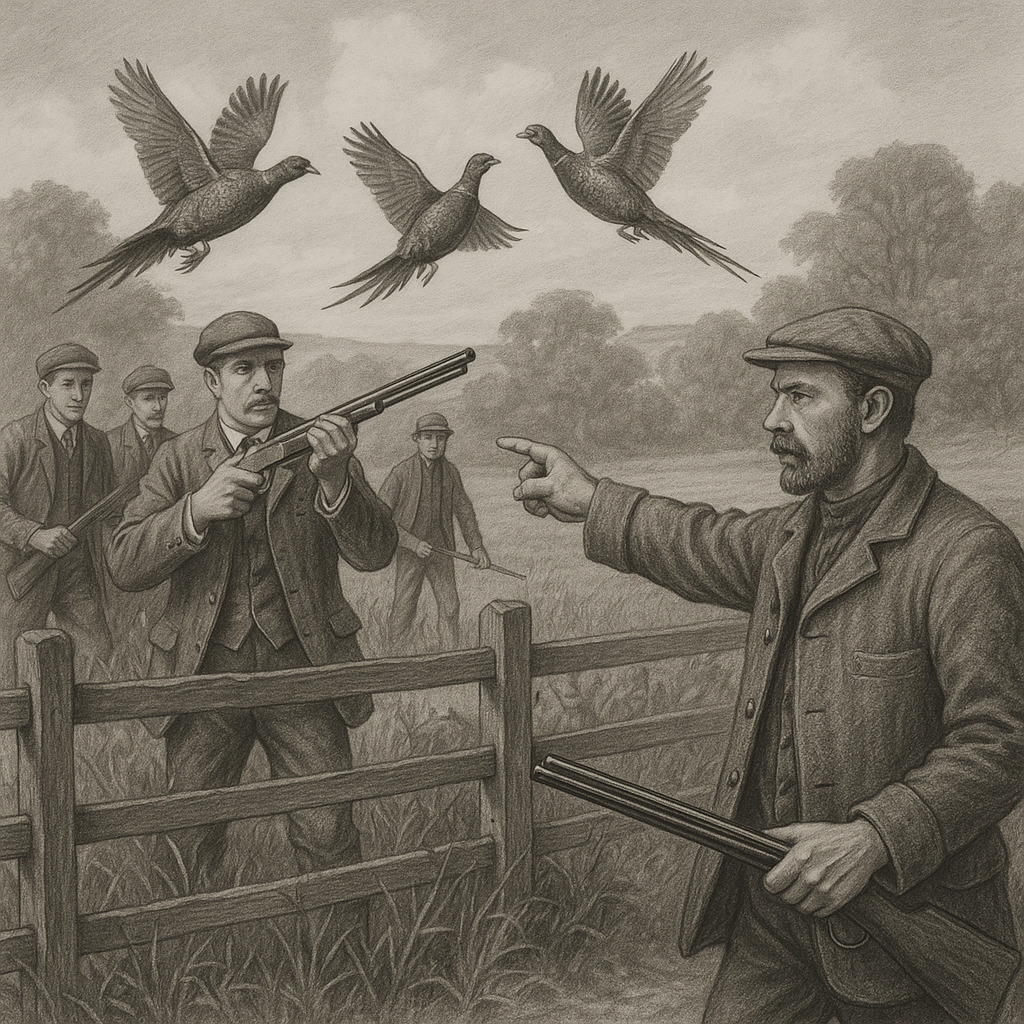
On this day the Western Morning News reported a contested case of game trespass at Wembury. Thomas W. Fox of Hoegate House, Plymouth, and Thomas F. Upsher of Mutley were summoned for unlawfully trespassing in search of game on land belonging to Mr. Cory. The complaint was brought by Benjamin Sansom, Mr. Cory’s gamekeeper, who alleged the men had stood in Kessell’s field, in the occupation of Mr. Sacking, and shot four pheasants. Sansom said he heard Fox instruct beaters to “beat this fence,” and told him he had been watching him.
The defence countered that Fox had rented shooting rights over neighbouring Staddiscombe from Mr. Bastard for eighteen years, and that his pheasants had risen from his own ground. Witnesses, including keeper Edwin Gould, confirmed this had long been the practice. Counsel Mr. Trehane argued the matter was essentially a civil boundary dispute rather than a criminal offence.
After lengthy evidence, the Bench found that the defendants had indeed been on Mr. Cory’s land and had shot four pheasants, but ordered that each party pay their own costs, granting a case stated for appeal.
This case reflects the tensions between neighbouring landowners in late Victorian Devon, when the boundaries of shooting rights were jealously guarded and disputes could escalate into public litigation.
Source: Western Morning News, 22 November 1892.
Entries are summaries and interpretations of historical newspaper reports.