
On This Day in Wembury — 23 November 1906
Free Churchmen meet at Plymstock
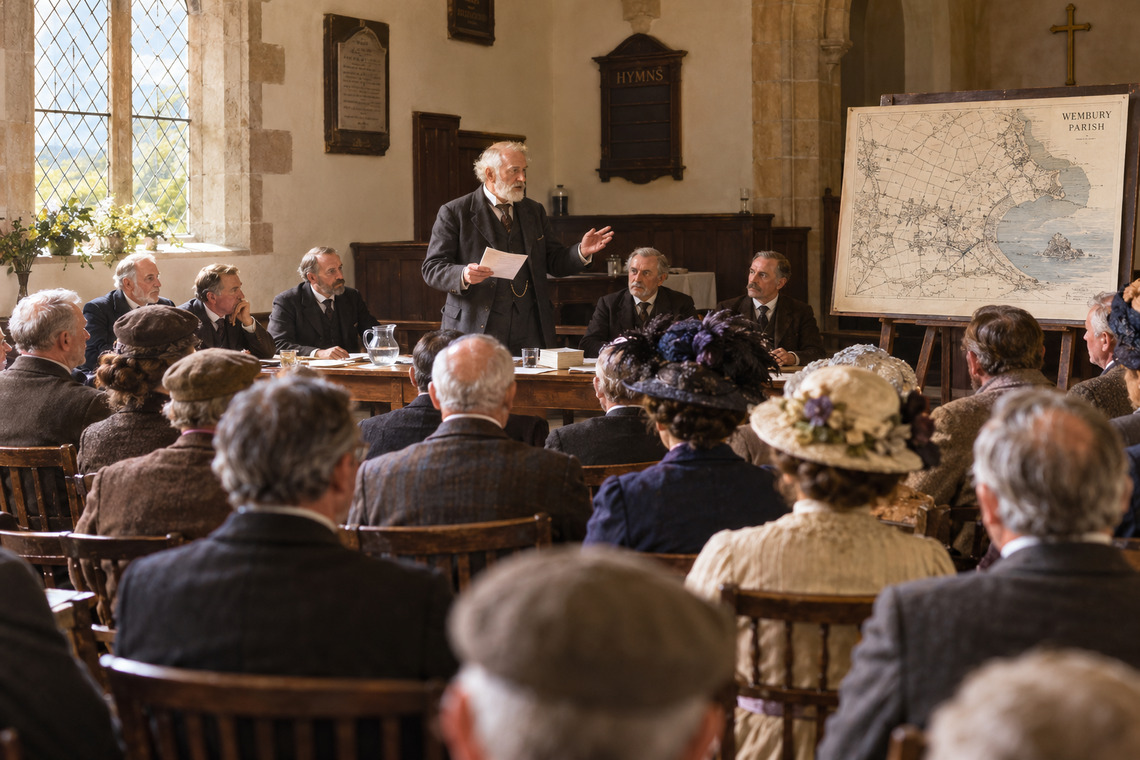
On 23 November 1906, the Western Morning News reported on the sixth annual meeting of the Free Church Council of Plymstock and Wembury, held the previous evening at Plymstock.
The meeting was well attended and chaired by Mr J. O. Coleman, with visiting speakers including Mr Joseph Davis of Plymouth.
The central theme was the position of Nonconformists in rural communities.
Mr Davis spoke about the growth of the Free Church Council movement and argued that local councils had proved especially valuable in villages, where people could sometimes feel isolated because of their religious views.
The term Nonconformist covered Christians who worshipped outside the established Church of England — including Methodists, Baptists, Congregationalists and others. By the beginning of the twentieth century, such denominations had become a major part of religious life across Britain, including in rural Devon.
The speaker argued that Free Churchmen needed to work together nationally, not only on questions of worship but also on wider social issues.
He insisted that the movement was fundamentally religious, but said Christianity should also have a practical effect on everyday life.
That led inevitably into politics.
Free Church organisations were sometimes accused of being closely associated with the Liberal Party, particularly because many Nonconformists opposed aspects of the 1902 Education Act, which provided public support for denominational schools, including Anglican and Roman Catholic schools.
The Wembury and Plymstock meeting clearly reflected those wider tensions.
One speaker told those present that Free Churchmen stood for equality, justice and the rights of every man, and that organised Nonconformity had an important part to play in tackling social problems.
For Wembury, this is an interesting glimpse of a religious life rather broader than the history of St Werburgh’s alone.
The parish church inevitably dominates much of Wembury’s surviving religious history, but this report reminds us that there were also villagers who identified strongly with the Free Churches and with the national Nonconformist movement.
Religion in Edwardian Wembury was therefore not simply a matter of attending the parish church.
It could also involve questions of education, social reform, political conscience and the rights of people who worshipped outside the established church.
For one evening in November 1906, those questions brought the Free Churchmen of Plymstock and Wembury together for their annual meeting.
Source: Western Morning News, Friday 23 November 1906.
On This Day in Wembury — 23 November 1945
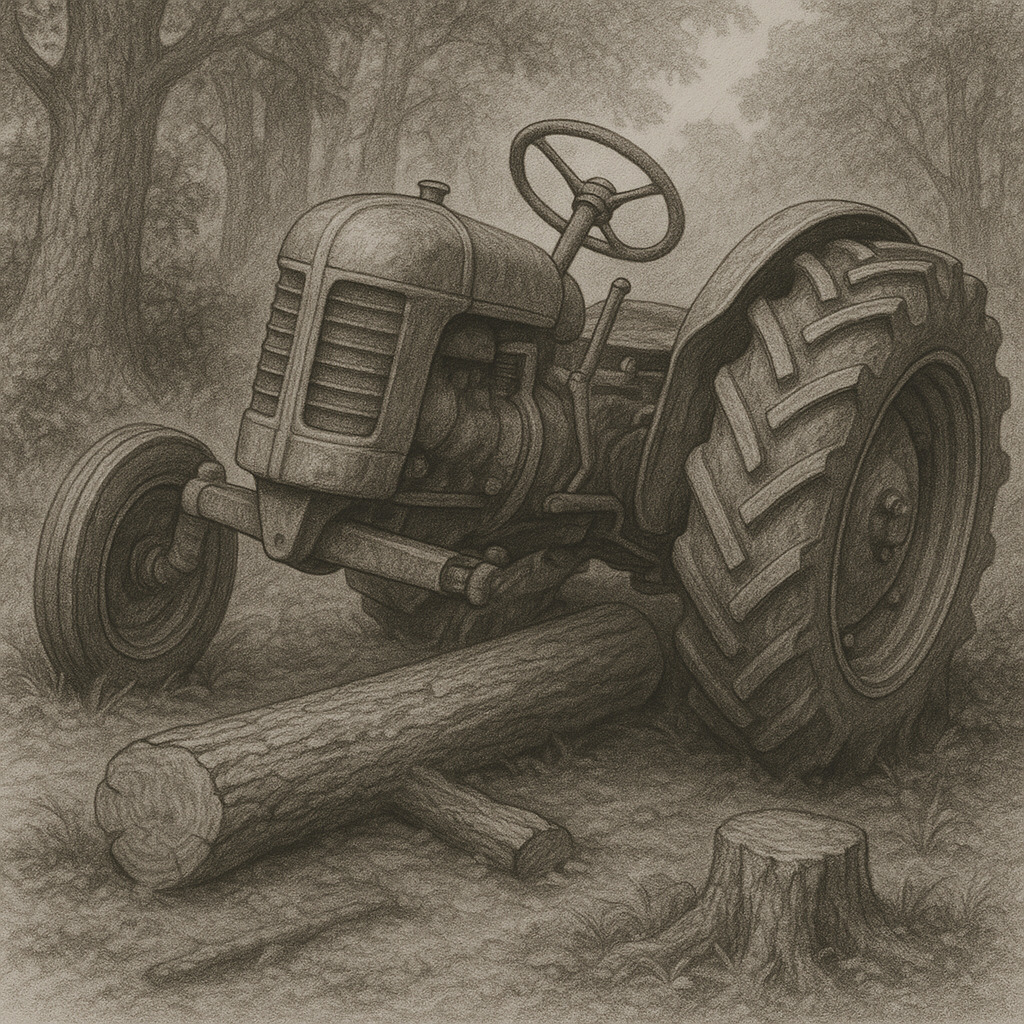
The Western Morning News reported a tragic accident in Wembury. George Henry Harvey, of Little Ryland, Hollacombe, lost his life while engaged in hauling freshly felled timber. It is believed that the log he was moving became caught between two tree stumps, causing his tractor to topple backwards and crush him.
Reflection:
This grim reminder from 1945 shows how dangerous agricultural and forestry work could be in the immediate post-war years. While much of the nation’s attention was fixed on rebuilding after the war, local men still faced daily hazards on the land. Stories like Harvey’s connect with earlier and later tragedies in Wembury’s working life, from smuggling skirmishes to naval accidents, underscoring how livelihoods bound to land and sea carried ever-present risks.
Source: Western Morning News, 23 November 1945.
Entries are summaries and interpretations of historical newspaper reports.