
On This Day in Wembury — 26 October 1938
Plymouth theatre helps the campaign to save Wembury Bay
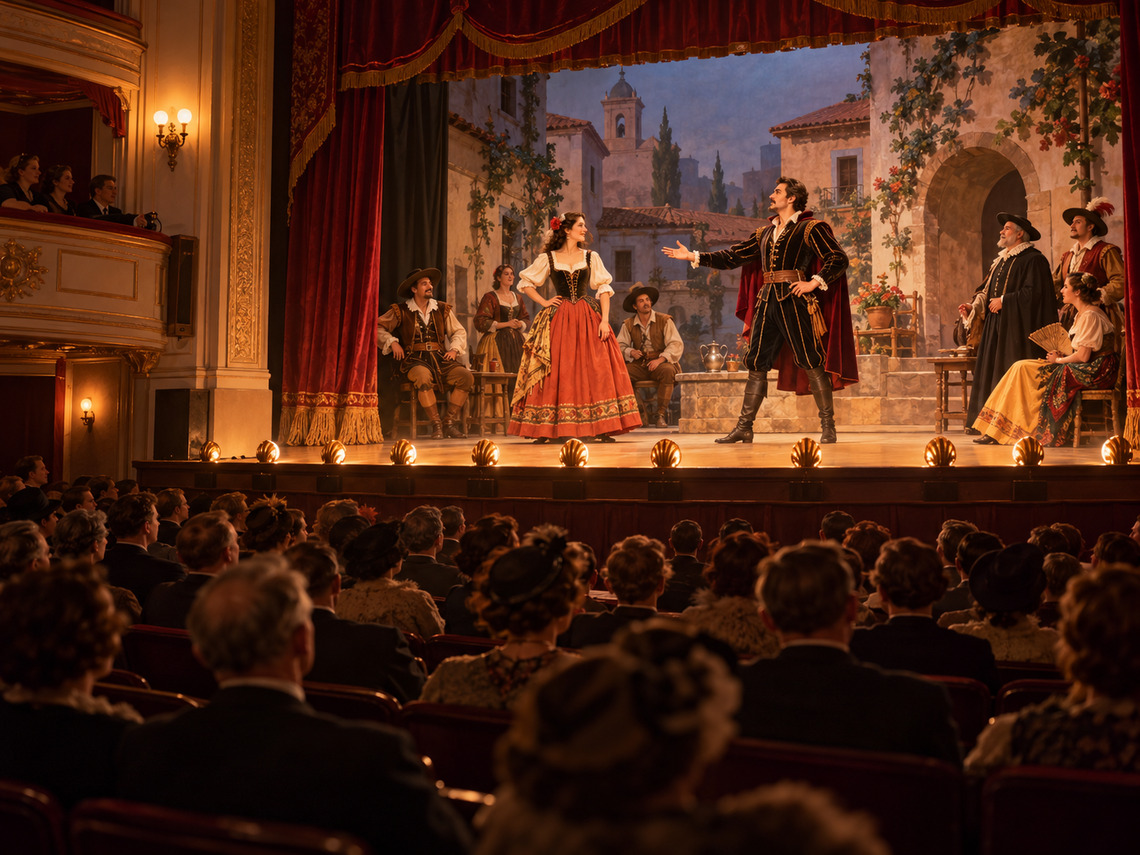
On 26 October 1938, the Western Morning News reported on an unusual theatrical production in Plymouth which was helping to raise money for the Wembury Bay and Cliffs Preservation Fund.
The play was The King and the Farmer, an English translation by Cecily Radford of Exeter of El Villano en su Rincón, a work by the great Spanish dramatist Lope de Vega.
The newspaper made much of the fact that this was believed to be the first production of the play in England.
It was being staged at the Globe Theatre in the Royal Marine Barracks at Plymouth, in a joint production by the Plymouth Arts Club and the Kelly Drama Society.
The production had a strong Devon flavour. The newspaper praised its country scenes and noted that several of the Kelly players had adopted a convincing Devonshire accent. One performer, Mr Abel Johns of Kelly, had even made a gramophone recording of Devon speech.
The play itself moves between the royal court in Madrid and a country village. Its story centres on a farmer so contented with his life that he has no desire to see the king, a situation which eventually brings the monarch himself into the action.
The Western Morning News praised the production for its colour, its crowd scenes and its sense of rural life, and described the staging as a successful mixture of courtly spectacle and village atmosphere.
Among those appearing were Miss Gwen Goodanew, Mr Clive Bailey, Mr Roy Johns, Mr J. Scott and others from the two societies.
But for Wembury, the most important detail came at the end of the report.
The production was to be staged again that evening in aid of the Wembury Bay and Cliffs Preservation Fund.
That places the performance directly within the major preservation campaign then under way to protect the coastline around Wembury Beach, the mill, church and surrounding fields.
By the autumn of 1938, fundraising was approaching its final stages. Only days later, further appeals would be made for the remaining money needed to complete the preservation scheme.
So this was more than an evening of amateur theatre.
For one night in Plymouth, a 300-year-old Spanish play, performed with a distinctly Devon accent, became part of the effort to preserve Wembury’s coastline.
It is another reminder that the landscape around the beach and church survived not through one single act, but through a long series of donations, appeals, performances and community efforts.
Source: Western Morning News, Wednesday 26 October 1938.
On This Day in Wembury
26 November 1998 — Conservation Award for Wembury’s VMCA
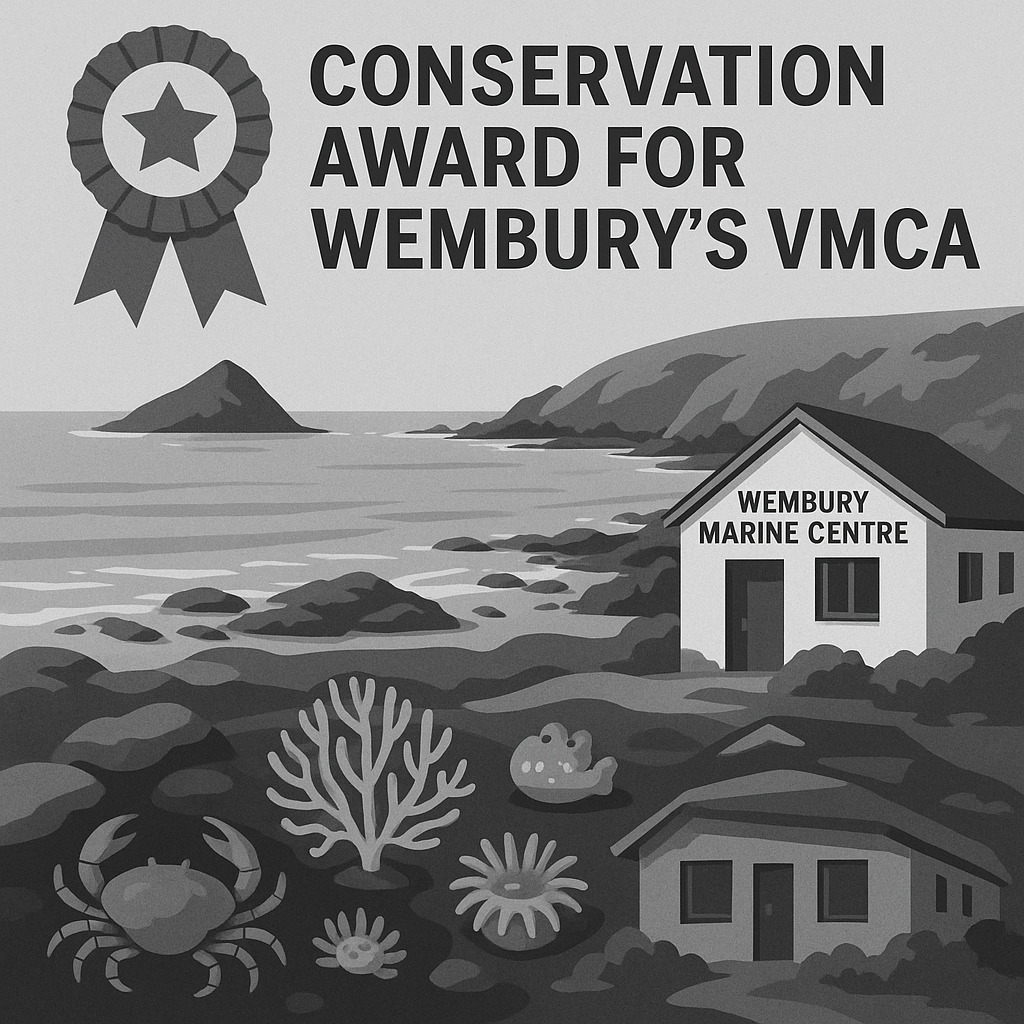
On this day Plymouth Extra reported that the Wembury Voluntary Marine Conservation Area (VMCA) had helped Devon Wildlife Trust secure a Henry Ford European Conservation Award worth £6,000. The prize recognised Wembury’s pioneering role in marine conservation and was earmarked to expand similar activities into North Devon, using Wembury as the model. The newspaper carried a photograph of Neal Phillips, warden of the Wembury Marine Centre.
The Wembury VMCA was established in 1981 as the first of its kind in the UK, protecting the rich wildlife of Wembury Bay, from shore crabs and anemones to the rare pink sea fan. It was created through local voluntary agreement rather than statutory designation, with Devon Wildlife Trust, local authorities, and the National Trust working together. The Wembury Marine Centre, which opened in 1994, became the public face of the scheme, welcoming thousands of visitors, school groups, and rockpool safaris each year. The 1998 award confirmed Wembury’s importance as a national leader in community-based marine conservation.
This recognition showed that a small Devon village could influence the wider European conservation movement. Wembury’s community-driven protection of its shoreline became a model for how people can safeguard their own natural heritage.
Source: Plymouth Extra, 26 November 1998.
Entries are summaries and interpretations of historical newspaper reports.