
On This Day in Wembury — 18 September 1942
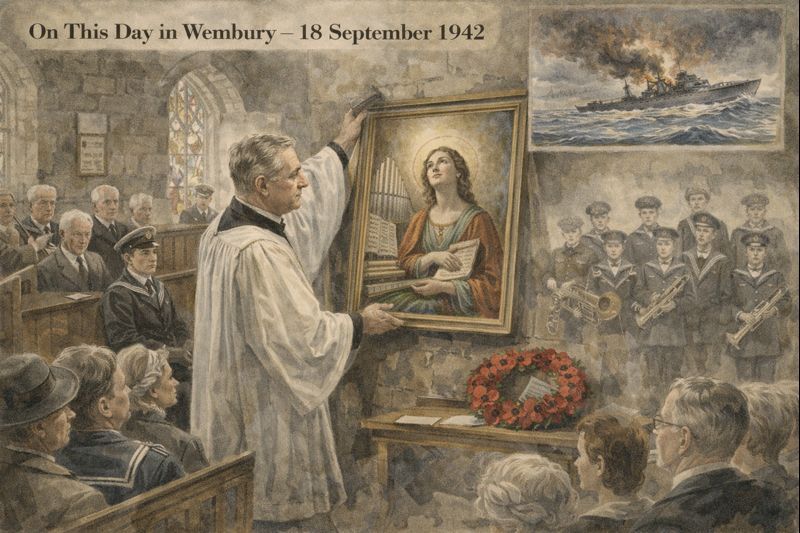
The Western Morning News announced that Wembury Church was to receive a special gift: a picture of St. Cecilia, to be presented at the coming Sunday service. The gift was arranged by the former vicar, Rev. C. H. D. Grimes, and friends, in memory of ten members of the Royal Naval Band who had once played in the church on Sunday mornings. All ten had been lost in action earlier that year, when HMS Trinidad was torpedoed in March. The report captured the parish’s anticipation of a moving act of remembrance, linking the music of peace with the sacrifices of war.
It is striking how the quiet traditions of a rural church — even the choice of a saint associated with music — were woven into the immense losses of the Second World War. Wembury’s story here echoes others in the archive: moments where local ritual and national tragedy met, leaving tangible memorials in stone, picture, or ritual that still speak today of resilience and memory.
On This Day in Wembury – 18 September 1991
Gasworks, cricket and an unwelcome roadside attraction
The Wembury news column in the Western Evening Herald on 18 September 1991 offered a wonderfully varied snapshot of village life: peace following the departure of the gas workers, a successful cricket season and an outbreak of fly-tipping beside a popular footpath.
The main headline was simply: “Thanks, South West Gas.”
South West Gas had completed the bulk of its work in Wembury and, according to the report, “peace and quiet” once again prevailed. Although major roadworks are rarely welcomed while they are taking place, residents had apparently been impressed by the conduct of the workforce.
The newspaper reported that the gas employees had behaved with “decorum” and had done everything possible to avoid causing unnecessary inconvenience. It was a generous little public acknowledgement of a disruptive job carried out considerately.
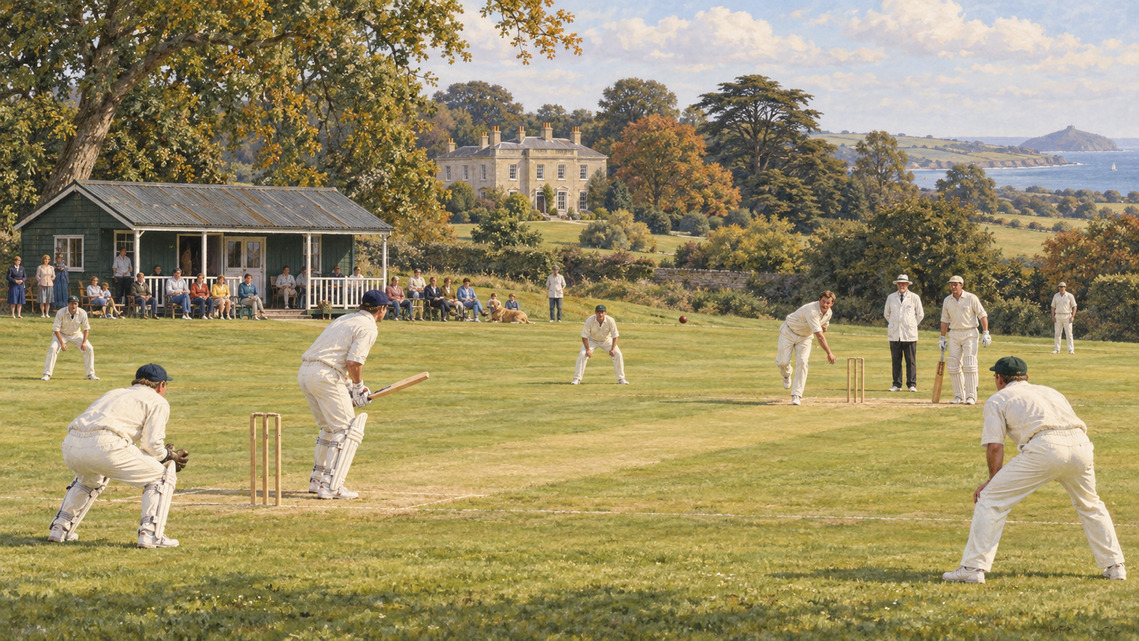
Elsewhere in the village, Wembury Cricket Club had enjoyed a busy season on its ground at Wembury House, which it used with the kind permission of Mr and Mrs Hanbury.
Club secretary Simon Fishlock reported that its thirty players had completed sixteen matches, winning seven and losing nine. The Colts section was also flourishing, with four teams covering the Under-13, Under-15 and Under-17 age groups, while the club continued to maintain links with Wembury Primary School.
Improvements had been made off the field as well. A flushing toilet had been installed in the pavilion and the club hoped to improve its catering before the following season. The committee was therefore on the lookout for a reasonably priced Calor Gas cooker.
The report ended this cheerful account by welcoming new players and spectators—particularly people from Wembury itself.
Unfortunately, the final item was much less encouraging. Footpath 30, close to the junction of Spring Road and Wembury Point, had recently been used as a dumping ground. Surplus tarmac, old pram or trolley wheels and assorted garden and building rubbish had all been abandoned there.
The path was described as a popular route for local people and visitors walking towards the coast path below. The correspondent understandably thought it sad to see such a well-used approach to the coast disfigured in this way.
More than three decades later, these short reports remain surprisingly familiar. Roadworks still test the village’s patience, local clubs continue to depend upon volunteers and modest improvements—and fly-tipping remains as selfish and irritating as it was in 1991.
Source: Western Evening Herald, 18 September 1991.
Entries are summaries and interpretations of historical newspaper reports.