
On This Day in Wembury — 2 October 1872
The Langdon Court Estate goes on the market
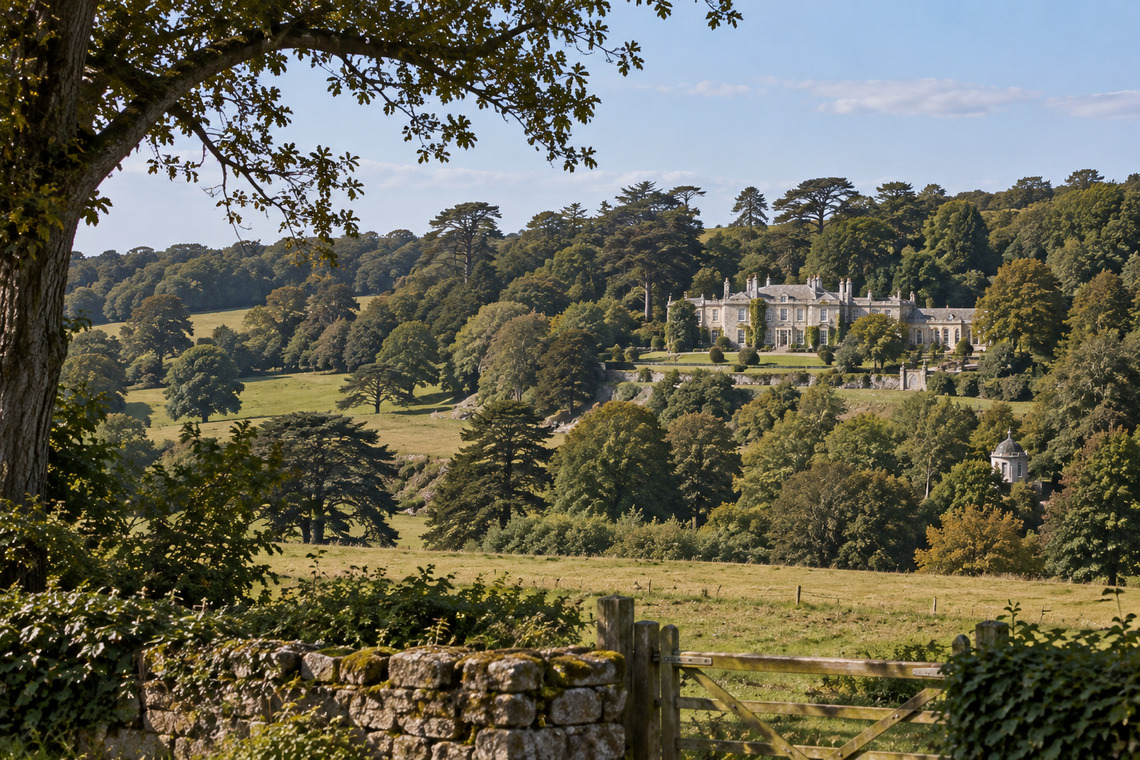
On 2 October 1872, the Exeter Flying Post carried a remarkable advertisement offering for sale one of the great landed estates of Wembury — Langdon Court.
Described as a “highly valuable and important freehold residential estate”, Langdon was then a vast property extending along the coast for about three miles, from Plymouth Sound and the mouth of the Yealm. The advertisement put the estate at about 1,915 acres.
At its heart stood Langdon Court, described as a substantial mansion surrounded by rich parkland, gardens and pleasure grounds. It contained around 25 bedrooms and dressing rooms, as well as drawing and billiard rooms, a library and extensive domestic accommodation. There were stables for eight horses, coach houses and other buildings.
But this was much more than the sale of a country house. The estate included nine farms, numerous cottages and labourers' dwellings, the New Inn and Jubilee Inn, valuable woodland and plantations, and even Wembury Beach and the Great Mewstone.
The advertisement made much of the scenery. From the estate there were views across the Channel towards the distant heights of Cudleigh, while to the west could be seen Plymouth Sound, Mount Edgcumbe and Dartmoor. The Great Mewstone itself was specifically mentioned as part of the property.
There was another attraction for a wealthy Victorian buyer: sport. The estate was said to offer excellent shooting, together with fishing and other sporting rights. Despite its rural setting, the advertisement pointed out that Langdon was only about six miles from Plymouth, with access by road and rail.
The sale is particularly interesting because it came at a turning point in Langdon's history. The Wembury Local History Society still holds material relating specifically to the 1872 Langdon Estate sale, including the catalogue and sale map.
Within a few years Langdon would become associated with Richard Cory and his family, beginning another important chapter in the history of the estate and of Wembury itself.
Perhaps the most striking thing about the 1872 advertisement today is its sheer scale. Wembury Beach, farms, inns, cottages, woods, parkland and the Mewstone could all appear in a newspaper as parts of a single property for sale. It is a reminder of just how much of the landscape we now think of simply as Wembury once belonged to one enormous country estate.
Source: Exeter Flying Post, 2 October 1872.
The Wembury Local History Society also has the 1872 sale catalogue and map in its collection.
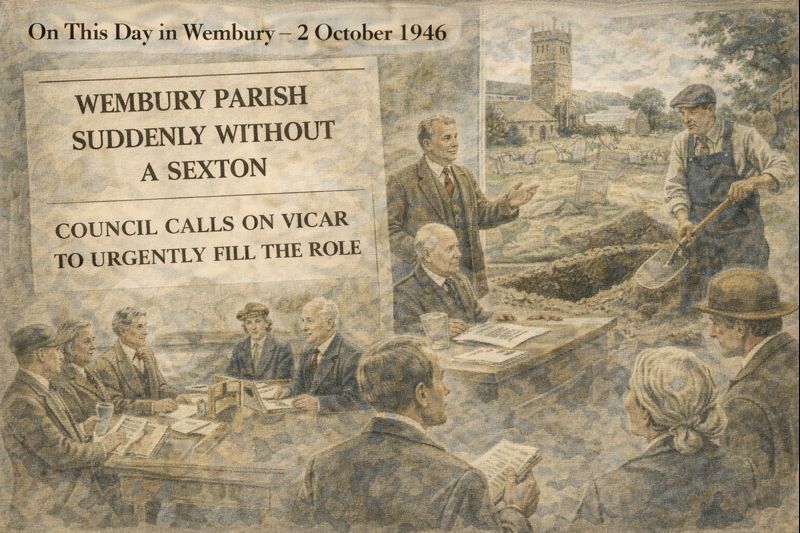
On This Day in Wembury — 2 October 1946
The Western Morning News reported that Wembury parish had suddenly found itself without a sexton. The man who had long carried out the duties had retired, leaving the parish without anyone to dig graves. At a Parish Council meeting it was noted that, while no blame was placed on the vicar or churchwardens, the situation could not continue. A formal resolution was passed urging the vicar to secure a new sexton as soon as possible.
Reflection:
A village without a sexton was more than just an inconvenience, it touched on deep community anxieties about death, tradition, and continuity. The sexton was not merely a grave-digger but often a custodian of the churchyard, a figure woven into the rhythm of parish life. That Wembury’s council felt compelled to intervene shows how vital this role was to the community’s sense of order. In the broader tapestry of Wembury’s history, it is a reminder of how small, practical gaps in village life could open into matters of dignity, ritual, and care for the dead.
Source: Western Morning News, 2 October 1946.
Entries are summaries and interpretations of historical newspaper reports.