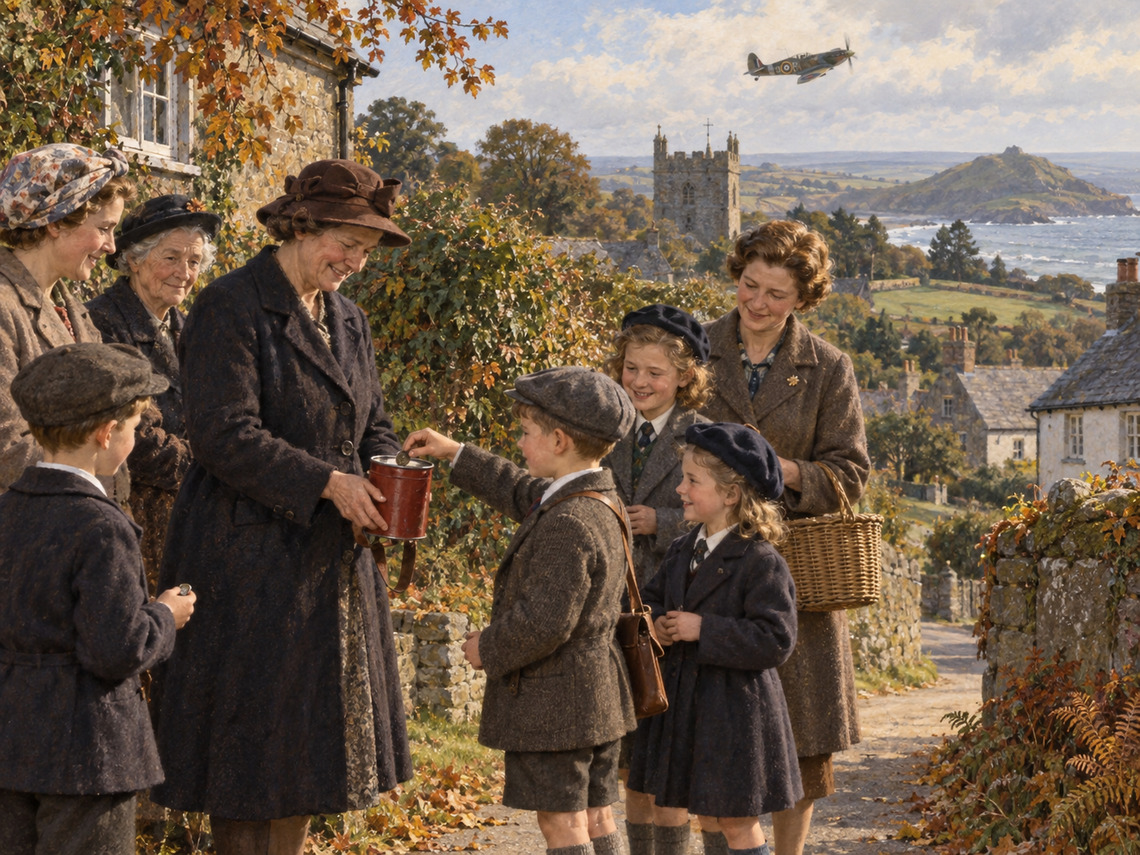
On This Day in Wembury — 16 October 1758

An advertisement in the Sherborne Mercury announced that the capital mansion-house of Langdon was “to be let, and entered upon immediately.” The notice described not only the main house but also the coach-house, offices, gardens, orchard, adjoining fields, and stabling for at least eighteen horses. A paddock and fish-ponds were included, with the liberty of killing deer and taking fish, and—remarkably—the free use of all the household goods and furniture.

The property had been the residence of Waldo Calmady, Esq., deceased, and the advert noted that it lay about four miles from Plymouth, firmly situating it in the parish of Wembury. Anyone seeking more details was directed to apply at Wembury House itself.


This glimpse of 1758 shows Wembury’s gentry houses in transition, their fortunes shifting with the deaths of owners and the needs of new tenants. The offer of hunting and fishing rights alongside a fully furnished mansion speaks of an elite lifestyle being marketed almost turnkey. Seen against later sales of Wembury estates in the 19th and 20th centuries, it reveals a long pattern: the parish’s great houses were never static monuments, but assets continually reshaped by inheritance, economics, and opportunity.

Source: Sherborne Mercury, 16 Oct 1758.
10-16.jpg


Wembury On This Day — 16 October 1940

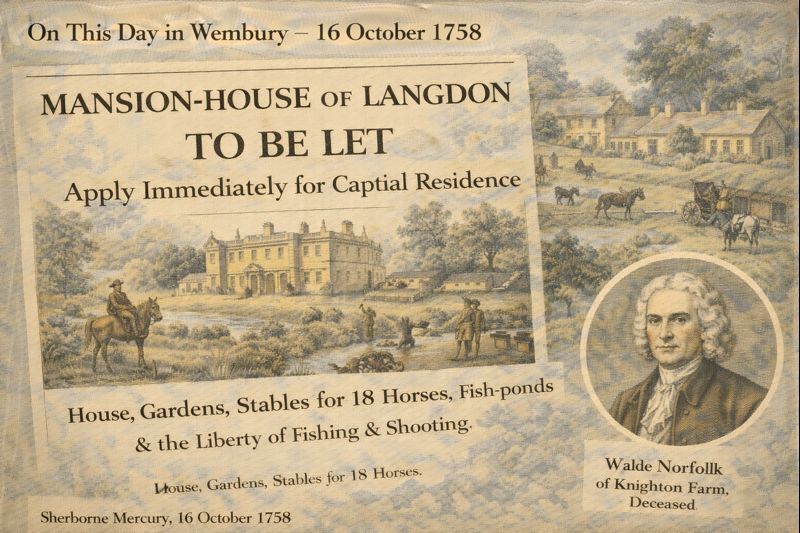
Wembury’s Spitfire effort

On this day in 1940, the Western Morning News reported on Wembury’s contribution to Plymouth’s Spitfire Fund — one of the many wartime fundraising drives through which towns and villages helped pay for fighter aircraft.

The newspaper noted that Plymouth’s fund had already exceeded its original £5,000 target, reaching £5,360, but that contributions were still coming in. In Wembury, the village had been divided into three collection districts, and 750 collecting cards and 65 collecting boxes were still out in the parish.

One particularly striking detail was the involvement of the school. The report recorded that 226 people had given more than £64 in addition to contributions from teachers and scholars at Wembury Council School, where there was a specific Wembury Spitfire collection. The money had been forwarded to the Ministry and a letter of thanks received.

That £5,000 target was significant. During the wartime “presentation aircraft” campaign, £5,000 was used as the nominal sum associated with funding a Spitfire. Communities, firms and organisations across Britain raised money this way, and successful efforts could have an aircraft associated with the donor’s chosen name.

Plymouth’s campaign had begun only a couple of months earlier. Contemporary accounts describe the slogan “Plymouth Hits Back” being used for the city’s Spitfire Fund in August 1940, when the total stood at just £150. By 7 October the Western Morning News was advertising that the fund had passed £4,000 and was appealing for the final £1,000. Less than ten days later, the paper was reporting that the original target had been exceeded.

That gives Wembury’s contribution a little more meaning. It was not an isolated village collection, but part of a fast-moving city and district campaign at a particularly tense moment in the war. The Battle of Britain was only just drawing towards its conclusion, invasion fears had dominated the summer, and Plymouth itself was a major naval target. Wartime morale reports from August specifically record anxiety in Plymouth about enemy aircraft appearing overhead without an immediate fighter response.

The newspaper also names the women thanked for organising Wembury’s collections: Mrs Pavitt, Mrs Downing, Mrs Maughan and Mrs R. A. Stansell. Their role is worth noticing. Much wartime fundraising depended on this sort of local organisation — people carrying cards from house to house, keeping track of small donations, arranging collections and encouraging neighbours to contribute what they could.

The school involvement is perhaps the most evocative part of the story. Children in Wembury in 1940 were living through blackout restrictions, air-raid precautions and the constant presence of the naval war around Plymouth. Yet they were also being drawn directly into the national effort through something as simple as a collecting box. A few coins from schoolchildren, household donations collected around the parish and larger gifts from residents all became part of the same total.

There is an appealing contrast between the modest scale of the village and the object of the appeal. Wembury was contributing pennies, shillings and pounds; the symbol at the other end was one of the most advanced fighter aircraft in the world.

Reflection

This tiny newspaper item captures something larger than the sum raised. Wartime Britain depended heavily on the feeling that ordinary people were participants rather than spectators. The Spitfire funds were highly effective at creating exactly that sense of involvement.

For Wembury, the story is particularly vivid because it reaches into familiar parts of parish life: the school, named local organisers, collecting districts and house-to-house fundraising. The war may have been fought in the skies over southern England and at sea beyond Plymouth Sound, but here it also appeared in village collecting tins and children’s pennies.

More than eighty years later, the sums themselves matter less than what they represent — a small coastal community making its own contribution at one of the most uncertain moments of the Second World War.

16thoct1940.jpg


Curated and written by Wembury Waves using material from the British Newspaper Archive.
Entries are summaries and interpretations of historical newspaper reports.