
On This Day in Wembury — 31 October 1817
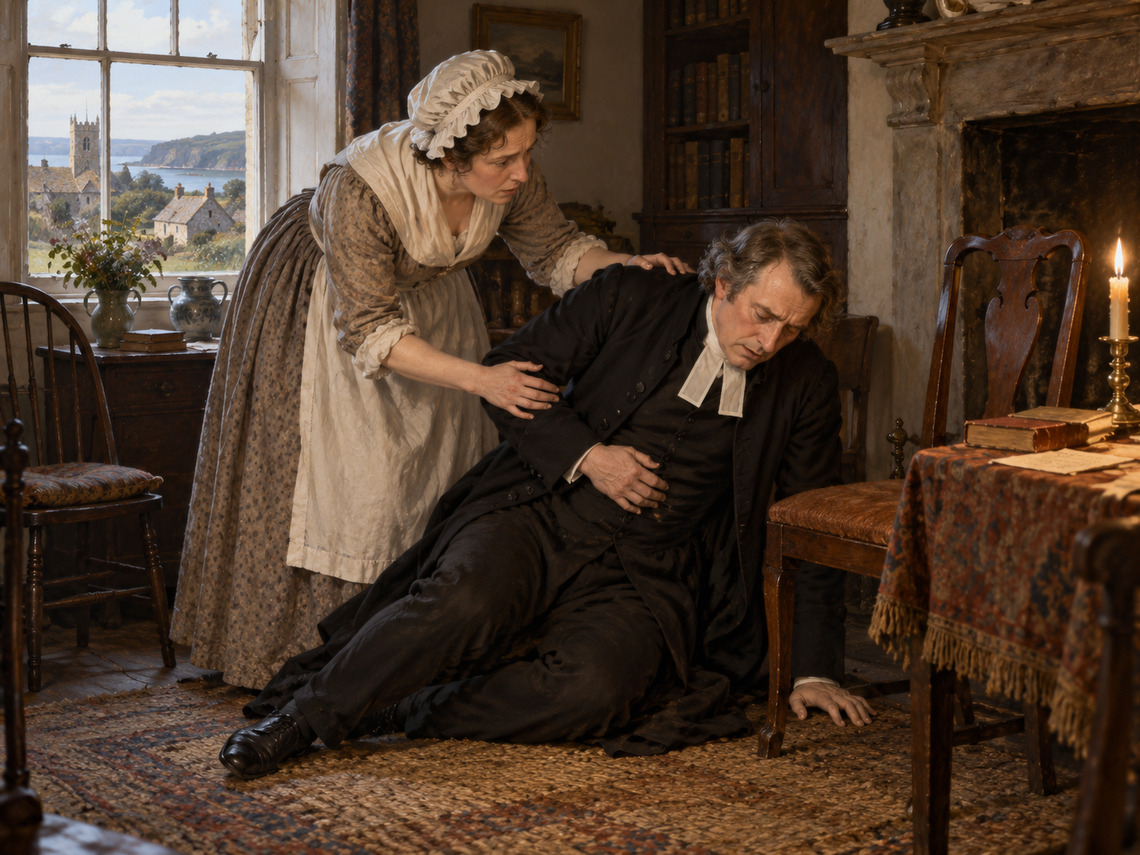
A brief but poignant notice in the Stamford Mercury of 31 October 1817 recorded the sudden death of the Rev. Mr Bates, curate of Wembury.
According to the report, he had shown no previous symptoms of illness. He complained suddenly of pain in his back and stomach and had scarcely begun to speak to Mrs B. when he fell to the floor and died. The starkness of the notice gives it particular force. There is no extended account, no elaborate obituary, simply the shock of an apparently healthy clergyman struck down without warning.
Although printed in a newspaper far from Devon, the report is a reminder of how news from even small parishes could spread across the country in the early nineteenth century, especially when it concerned clergy. A curate was an important local figure, conducting services, visiting parishioners, baptising children, burying the dead and helping to sustain the everyday religious life of the village. His sudden death would have been felt keenly in a community the size of Wembury.
In 1817 Wembury was still a small rural and coastal parish, centred on St Werburgh’s Church, with its commanding position above the water. The curate’s role would have involved not just Sunday worship but the whole fabric of parish life in a place where church and community were closely bound together. To lose a clergyman so abruptly would have been deeply unsettling.
The wording of the report also reflects the style of the period. Death notices could be extremely compressed, giving only the essentials, yet in this case those essentials tell a vivid story: a sudden complaint, an attempted remark to his wife, and then collapse. Such notices are often the only surviving public record of intensely personal moments.
For Wembury, this is one of those tiny fragments from the past that opens a window onto village life. Behind a few lines of print lies a household in shock and a parish unexpectedly bereaved. Two centuries later, the report still carries that sense of suddenness.
Source: Stamford Mercury, 31 October 1817.
(From the symptoms described, modern readers might suspect a catastrophic internal event such as a ruptured aortic aneurysm, though with no post-mortem evidence the true cause cannot now be known)
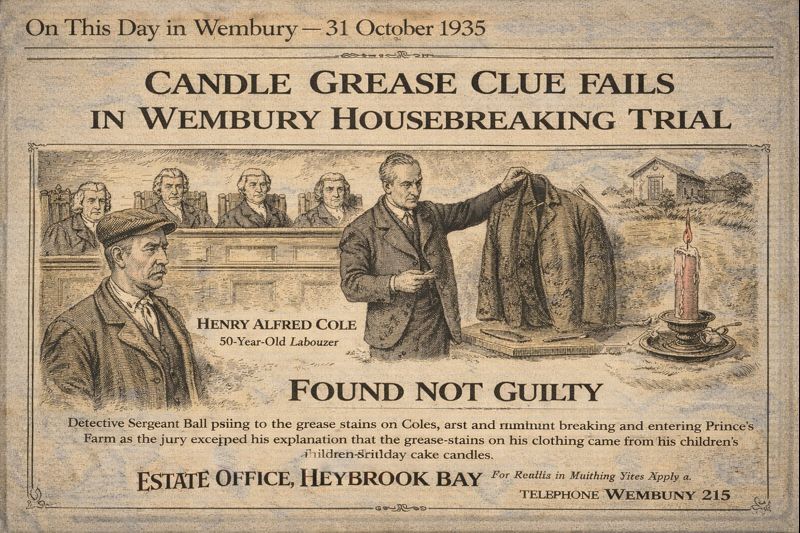
On This Day in Wembury — 31 October 1935: Candle grease clue fails in Wembury housebreaking trial
On this day the Western Morning News reported the Devon Assize trial of Henry Alfred Cole, a 50-year-old labourer, accused of breaking and entering Prince’s Farm at Down Thomas, Wembury parish, the home of Robert Pitts Giles. The house had been entered on 6 October by smashing a zinc window. A pink ornamental candle found inside had been lit and used by the intruder, and police claimed grease stains on Cole’s coat and waistcoat matched the substance of that candle.
Evidence was given by Sergeant Ball and an analyst from Plymouth police laboratory who confirmed that the wax samples were of the same group. Cole, represented by Mr H. Elam, denied the charge, stating he had been at the village inn from 6.35 to 10.30 that evening. He explained that grease on his clothing came from his children’s birthday cake, which just days before had been decorated with candles of several colours. The jury accepted his account and returned a verdict of not guilty, and Cole was discharged.
This case shows how forensic evidence was beginning to be used in local trials but also how tenuous such matches could be. It sits with other Wembury-area court stories, such as the 1825 Gabber Bridge assault and the 1908 Lewin housebreaking, illustrating how rural crimes were pursued through the higher courts.
Source: Western Morning News, 31 Oct 1935
Entries are summaries and interpretations of historical newspaper reports.