
On This Day in Wembury – 14 November 1827
Tragedy at Sea for Wembury House Family
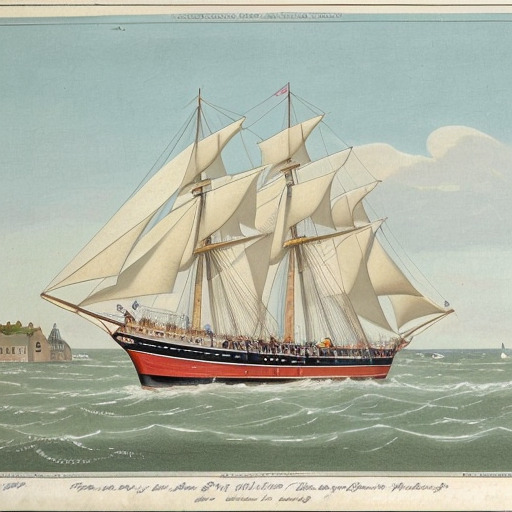
On this day in 1827, Charles William Thornton, the second son of Sir Edward Thornton, G.C.B., of Wembury House, died at sea while serving as a Midshipman aboard HMS Tweed. He was only 14 years old. The Sun (London) of March 1828 later recorded his death, noting he had been in the 15th year of his age.
This poignant detail reminds us how closely the Thornton family’s story at Wembury was tied to Britain’s naval world. The house itself stood proudly above the Sound, its residents often directly involved in maritime and diplomatic service.
It’s striking how Wembury House’s history is written not just in stone and timber, but in the lives of those who lived there — and sometimes, as here, in their losses far from home. From the midshipman’s tragic death at sea to later sales and restorations of the estate, each fragment deepens the record of how Wembury families were bound to wider events.
Source: Sun (London), 1 March 1828 (reporting death of 14 Nov 1827).
On This Day in Wembury — 14 November 1930
Mrs Sebag-Montefiore praised for supporting the Services YMCA
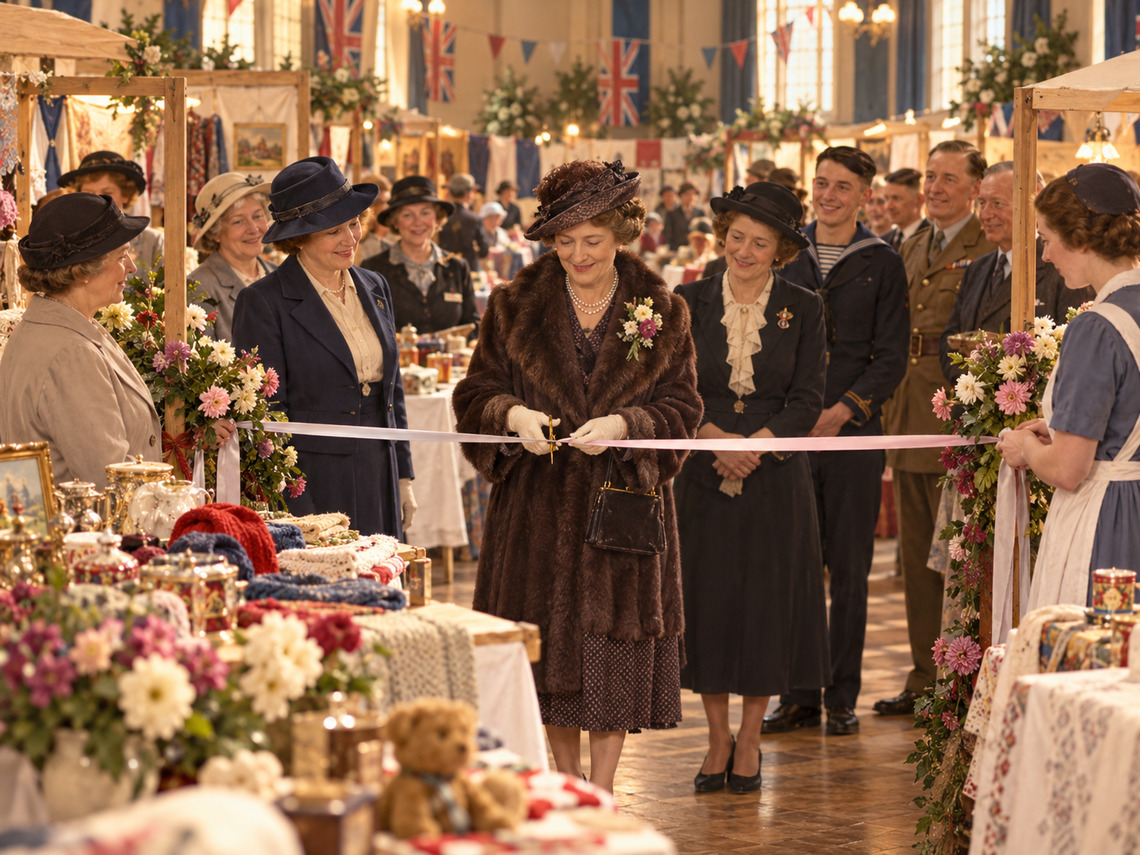
On 14 November 1930, the Western Morning News reported on a bazaar in Plymouth held in aid of the United Service Men’s YMCA, with Mrs Sebag-Montefiore of Wembury playing a prominent part in the event.
The bazaar was opened by Mrs Sebag-Montefiore, who was introduced by the Voluntary Women’s Auxiliary. In her remarks she paid tribute to the work of the YMCA, saying that the organisation helped men of all denominations and was not confined to any single church or religious body.
The meeting was presided over by Mrs W. H. J. Priest, and those present included Mrs Lawrence, wife of Commodore N. F. Lawrence, and Mrs B. Roe. The event was clearly intended not only to raise money, but also to underline the value placed on the YMCA’s support for serving men and their families.
The YMCA had already built up a strong association with the armed forces by this period. During and after the First World War it had provided recreation rooms, refreshments, accommodation, letter-writing facilities and welfare support for servicemen both at home and overseas. In a major naval city such as Plymouth, that work had an obvious importance.
Mrs Sebag-Montefiore’s involvement is another small but useful glimpse of her public life while living at Thorn, Wembury. She appears repeatedly in local records not simply as a landowner, but as someone involved in charitable, social and civic causes in the Plymouth and Wembury area.
Only a few years later, her name would become even more closely associated with Wembury through her role in preserving part of the local coastline and helping to secure land for the National Trust.
This 1930 report shows a rather different side of her activities: not landscape preservation, but practical support for a welfare organisation serving men connected with the armed forces.
It is the sort of brief newspaper item that reminds us how much local history lies in seemingly minor social events. A village resident opening a bazaar in Plymouth may not sound especially dramatic, but it places Wembury directly into the wider civic and naval life of the city between the wars.
Source: Western Morning News, Friday 14 November 1930.
Entries are summaries and interpretations of historical newspaper reports.